Representative operating sample
Specify the component identity, operator action, outdoor attachment conditions and acceptance evidence for the handoff.
SOLUTIONS / TOOLS / APPLICATION
Validate that a defined component reaches the intended site, work area or handover rather than relying on a nearby read alone.
01 / THE OPERATING DECISION
Validate that a defined component reaches the intended site, work area or handover rather than relying on a nearby read alone. This page turns that operating question into a bounded RFID workflow: identify the object, define the event, keep exceptions visible and validate the system handoff with representative items.
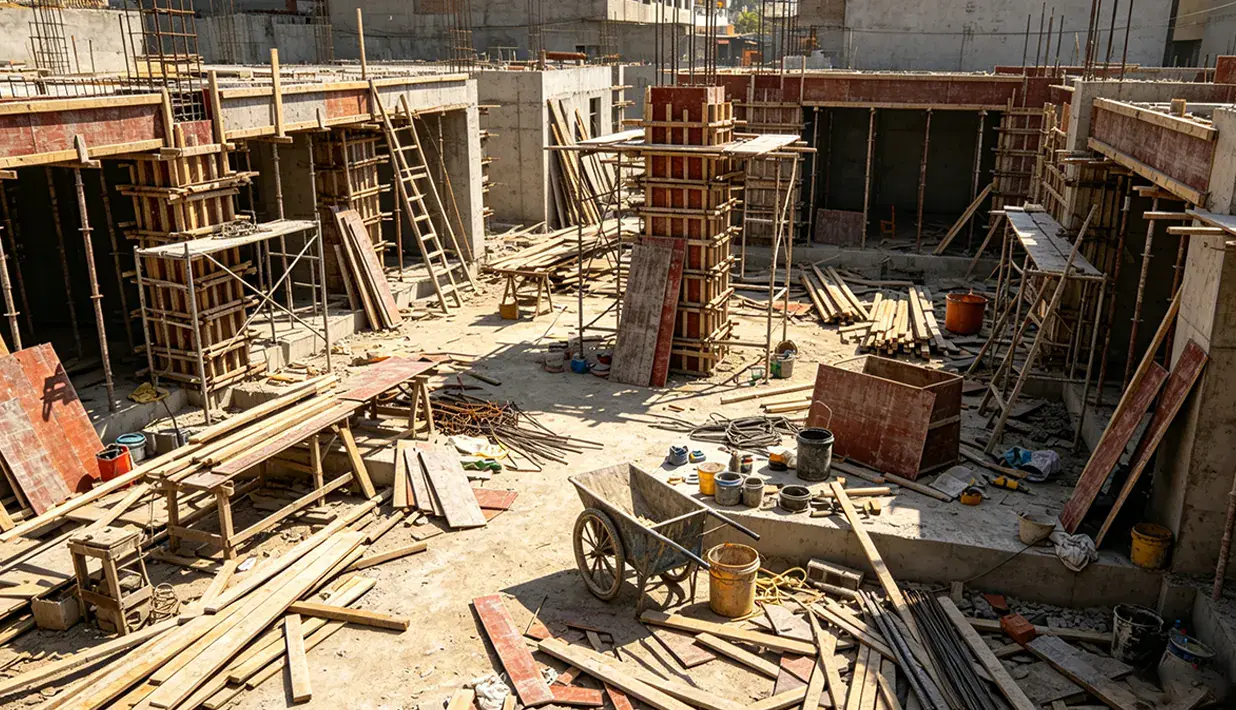
FIELD VIEW / ILLUSTRATIVE CONTEXT
The visual grounds the operating setting. It is not evidence of a customer installation, product configuration, measured result or readiness for this workflow.
Open the parent Solution02 / EVENT WORKFLOW
Use the workflow map to distinguish a physical observation from the business event, exception and handoff that give it operational meaning.
Start with the physical construction component verification and record the identity level, material, attachment and state the operation actually needs.
Define where the issue, return, inspection, service, handover or overdue event should happen, what should be ignored and how an operator receives enough context to act.
Compare identity, location, time and direction with the expected construction component verification state; hold missing, duplicate or unwanted observations for review.
Route the accepted event and the exception outcome to the tool-room, maintenance, project or crew owner; document the fallback before expanding the workflow.
03 / OPERATING SCOPE
These facts are the design inputs that keep an identity observation tied to an operating decision instead of an unexplained signal.
04 / FIRST REVIEW
Each review item is a decision to make with representative items, real operators and the systems that will receive the event.
Specify the component identity, operator action, outdoor attachment conditions and acceptance evidence for the handoff.
Confirm the fields needed to interpret construction component verification: identity, location, time, direction or custody, plus the condition that keeps a raw read from being treated as proof.
Write the response for a missing, duplicate, out-of-bound or disputed event and name the tool-room, maintenance, project or crew owner who approves the next action.
05 / VALIDATION PLAN
The first validation is a bounded proof of the operating rule, exception process and evidence trail. It is not a promise about later performance in a different environment.
Use representative tool, powered equipment, kit, component or reusable instrument samples, pack variation, attachment positions and the environmental conditions that will exist at the point of work.
Walk the intended issue, return, inspection, service, handover or overdue event as well as nearby movement, repeat reads, missing identity and recovery cases before accepting a read boundary.
Confirm that the tool-room, maintenance, project or crew owner can review, approve or correct the event and that the resulting record remains traceable to the physical observation.
RFIDBRIDGE / APPLICATION REVIEW
Use this field brief to frame representative items, the event boundary and the system record that needs to receive a reviewable result.
Request a sample test