Construction
Tools, equipment, materials and custody events across yards, projects and crews.
01 / THE QUESTION
Where does
visibility break?
Tools, equipment, materials and custody events across yards, projects and crews. RFID becomes valuable when it reduces a specific handoff, search, count or verification problem and puts a trusted event into the right system.
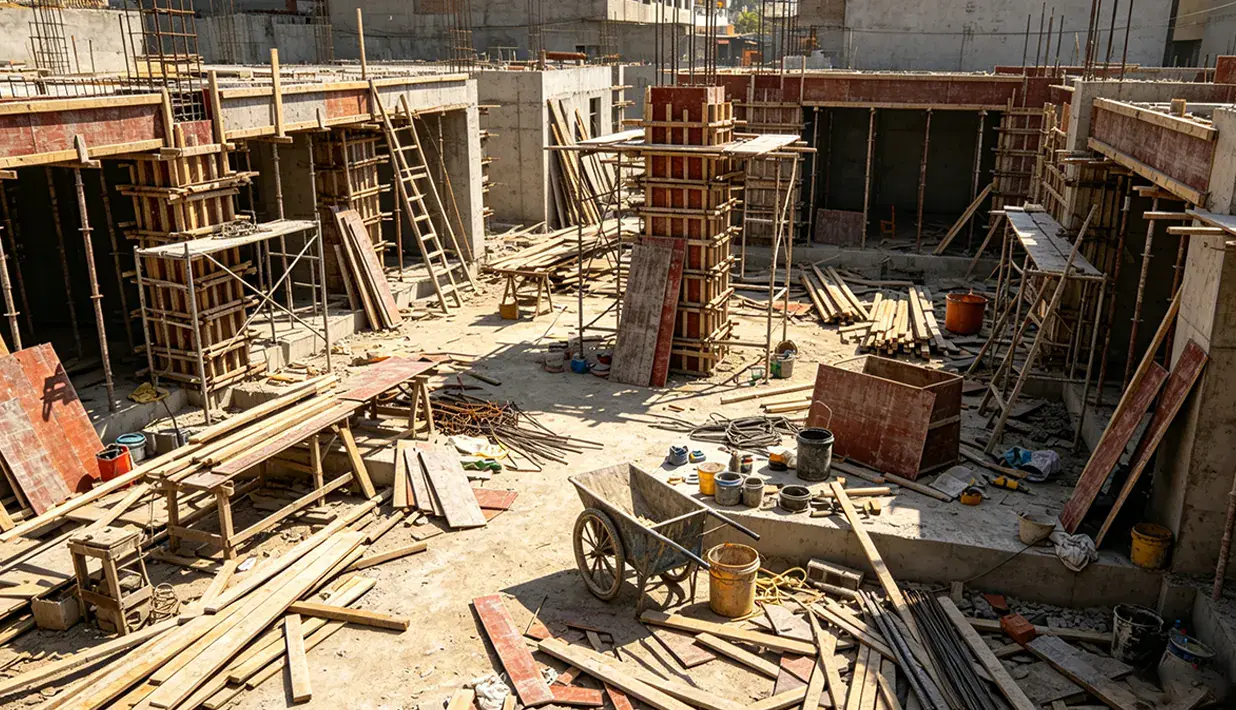
FIELD VIEW / PROJECT MATERIALS
Know what moves
before the next crew.
Construction RFID can connect material, equipment and custody events when the item, attachment and handoff have been tested in the field.
- Identify tools, equipment or material units at defined handoffs
- Capture custody and location events across yards and projects
- Test tag attachment against dust, abrasion, metal and movement
02 / INDUSTRY WORKFLOW
Four moments.
One accountable handoff.
Reduce tool search time and create a dependable handover record for teams in the field. The sequence below is specific to the operating environment and remains subject to representative testing.
Register the project item
Assign identity to the tool, material, container or kit and record the site or project context.
Move between zones
Capture a handoff between tool room, vehicle, laydown area and work zone with the boundary clearly defined.
Confirm custody
Require the responsible team or person to review an observed movement before it becomes a custody decision.
Recover or maintain
Route missing, damaged or returned items to the site action that closes the exception.
03 / INDUSTRY KIT
Equipment follows
the operating point.
A starting configuration for this industry may include these elements. The exact model, tag construction, region and availability remain project questions.
04 / INDUSTRY-SPECIFIC SCOPE
Make the material
and risk explicit.
Industry context changes the test. These are the details to carry into the first sample, site survey or proof of concept.
Review the planning serviceTools, materials, containers, site zones and project handover records.
Outdoor exposure, changing site boundaries and a last-seen event mistaken for custody.
Test a site-to-site or tool-room handoff with weather, attachment and missing-item recovery considered.
05 / SYSTEM HANDOFF
Respect the
system of record.
Construction events should carry project, site, item, custody and exception context to the system that coordinates field work.
06 / DEPLOYMENT PATH
Prove one
repeatable moment.
Start with a tool family and one custodian process, establish a return policy, then extend to vehicles, kits or remote sites.
- Define the acceptance target
- Test the item and environment
- Train the people who own the exception
- Scale only after the workflow is usable
07 / INDUSTRY FAQ
Scope the first
conversation.
Often yes, using a compact on-metal tag and a tested attachment point. The surface, curvature and expected abrasion determine the final selection.
Reusable tags are possible for durable assets, while disposable labels may be better for consumables or high-turnover items.