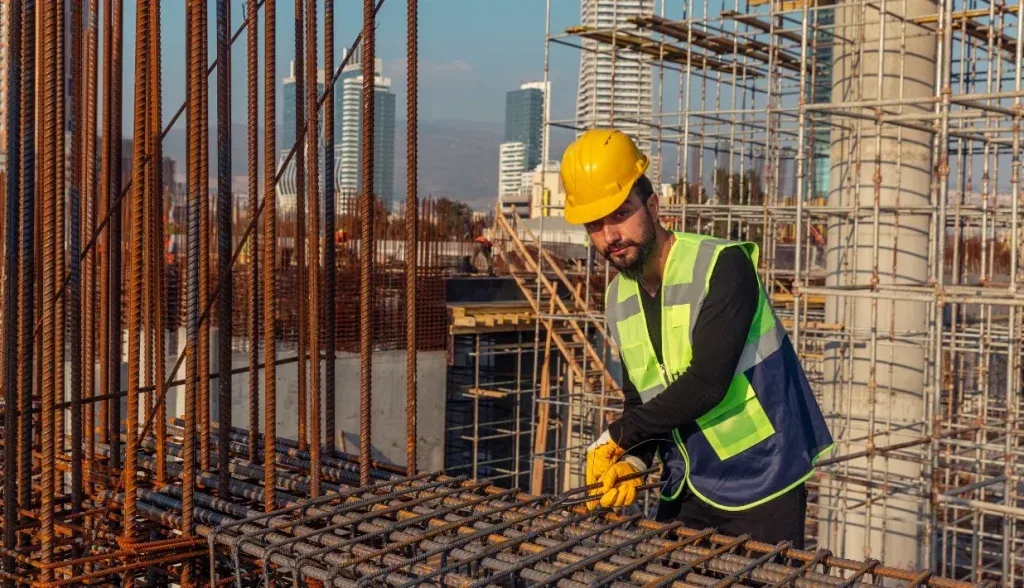
Rework is not the cost of a mistake; it is the cost of a mistake discovered late. Installation errors go uncaught because verification happens after the work is buried. Verification at the point of execution — each installed component scanned and checked against the design — moves the detection from the end of the phase to the moment of the act.
01 / FIELD NOTE
Keep the decision tied to the operating context.
An installation error — a component put in the wrong location, a step skipped in a sequence, a part that does not match the drawing — is cheap at the moment it happens and expensive when it is found. The gap between those two moments is what turns a mistake into rework. The problem is therefore not that errors occur; it is that they are not detected while the work can still be corrected. The reason they are not detected is structural: verification happens after the phase, on a checklist or an inspection, when the work is already buried under the next layer.
The traditional verification stack fails at its weakest link, the point of execution. Manual checklists are filled in, sometimes after the fact, by people who were also doing the work; paper inspection reports travel late and cannot be tied to a component; photographs document without validation; end-of-phase inspections find errors that the next phase has already concealed. Every one of these is reactive — the verification happens after the act, and after the concealment. The error that reaches the inspection station is the error that will be reworked.
Rework is expensive not because of the correction itself but because of everything the correction drags along. Dismantling completed work, reordering materials, reallocating labour, interrupting a scheduled flow, re-coordinating the subcontractors — each layer multiplies the base cost of the mistake. The timeline disruption is the larger half of the invoice, and it is why construction projects measure rework as a driver of overruns: a small error discovered at the end of a phase can disturb the sequencing of an entire adjacent one.
The move to digital installation verification changes the point at which validation happens, not the technique. A field worker scans the component at the moment of installation; the scan carries identity, location and a timestamp; the record is linked to the component, not to a checklist that passes the phase. Verification is no longer a separate act performed after the work — it is folded into the act of doing the work. The discipline moves from "inspect what was done" to "confirm as it happens".
The mechanism that makes the scan authoritative is the physical-to-digital bridge at the component level. A tag on the component answers only to a direct near-field read, which ties the record to the specific physical part in the worker’s hand — a QR code covered in dust or a checklist filled in from memory is replaced by a radio identity that the worker has to be beside. The scan is a fact about the component, not an assertion in a form.
Verification at the point of execution also restructures the responsibility. Because each installation action is recorded against the component, a supervisor can see which steps of which sequence were completed by whom, in what order, and against which drawing revision — the record is a transparent, auditable chain rather than a summary. The sequence itself can be enforced: an installation step is not marked complete until the steps it depends on are. The digital layer turns the rule "install in the right order" from an instruction into a gate.
The honest limit: scan-at-installation verification catches errors of identity, location, orientation and sequence — the things a scan can see. It does not catch a bad weld or a torque applied wrongly, any more than a checklist does. What it buys is that every error that is visible to the radio eye is caught at the moment of the act, before concealment, and every installation step that was completed is a recorded fact rather than an assertion. The rework loop is closed exactly where it used to be open — at the point where the work and the verification could no longer be separated.
02 / THE GAP
Rework is a delay in detection, not a mistake.
- The error is cheap at the moment it happens
- It is expensive when found, buried under later work
- Checklists and end-of-phase inspections find it late
- The time between the two moments is the rework bill
03 / THE BRIDGE
The scan turns the act into a fact.
- A tag answers only to a direct near-field read
- Identity, location and timestamp ride with the component
- A record is linked to the part, not to a checklist
- The worker has to be beside the part to scan it
04 / THE GATE
Sequence becomes enforced, not instructed.
- Confirmation happens at the point of execution
- Dependent steps must complete before the next opens
- The record is transparent and auditable per component
- The scan sees identity and order — not torque or weld quality
Bring the item, material, movement, target read and system context to a sample or project review.
Request a sample test