Mod 8 – RFID Solution Design – What is Tested
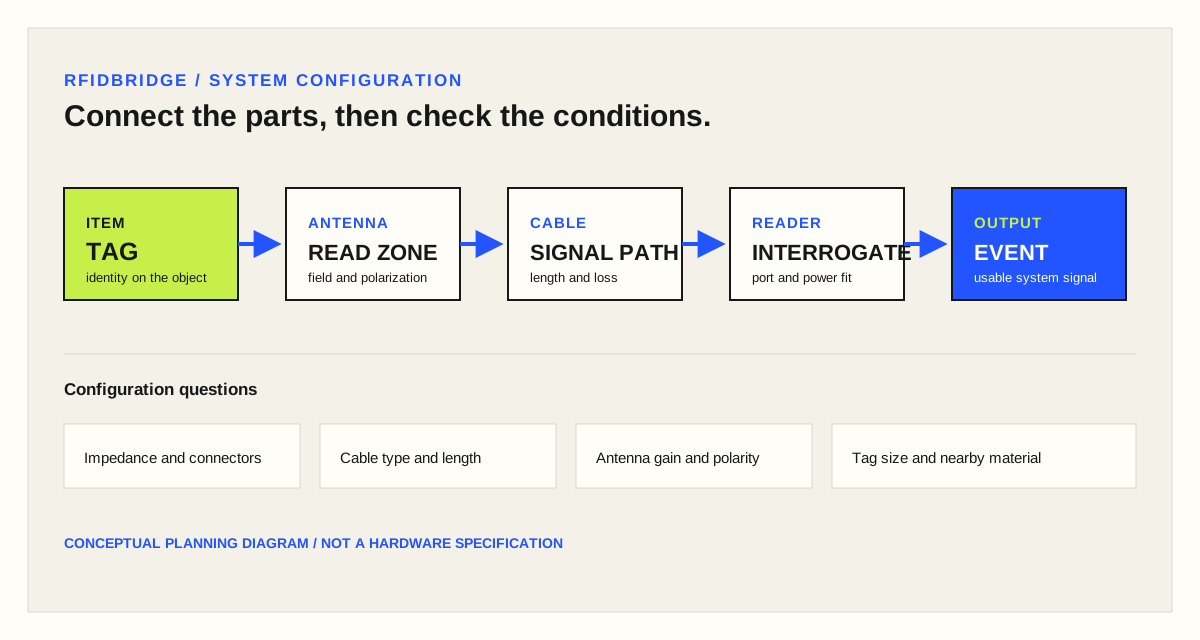
Configure the reader, antenna, cable and tag as one system before relying on the resulting read event.
Read the notePractical RFID notes organized around identity, readers, tags, architecture, standards and deployment decisions.
01 / KNOWLEDGE BASE
01 / LIBRARY MATERIAL
Use reviewed technical material to frame reader behavior, system decisions and deployment evidence before an application-specific test.
Configure the reader, antenna, cable and tag as one system before relying on the resulting read event.
Read the note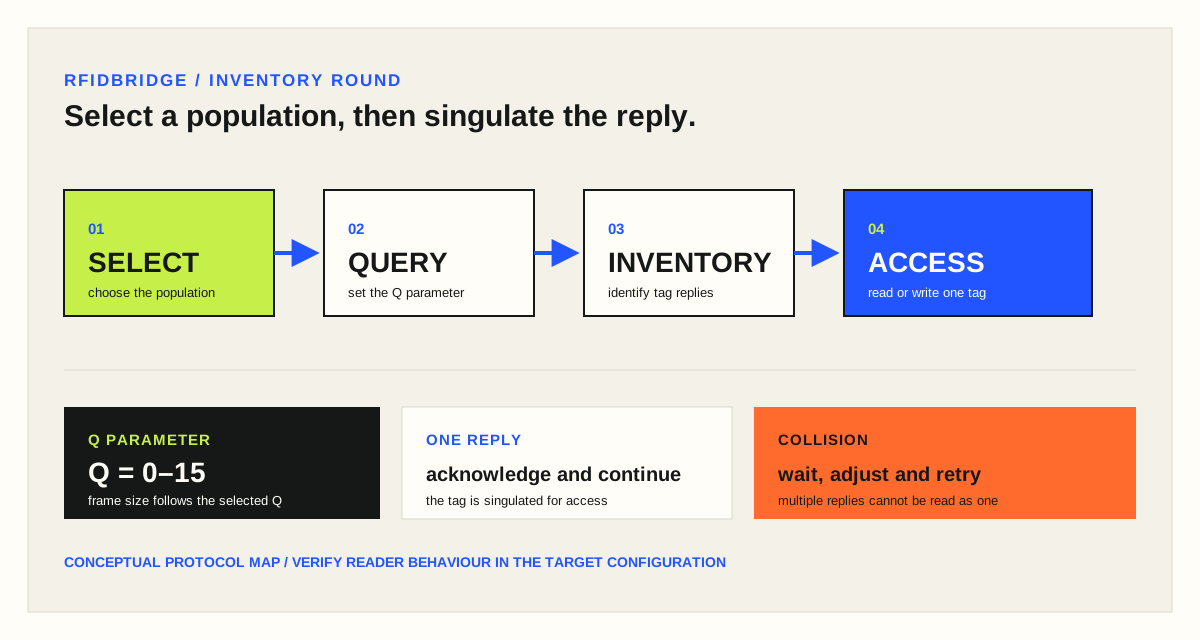
Select, inventory and access operations help a Gen2 reader manage tag populations; the Q parameter helps handle reply collisions.
Read the note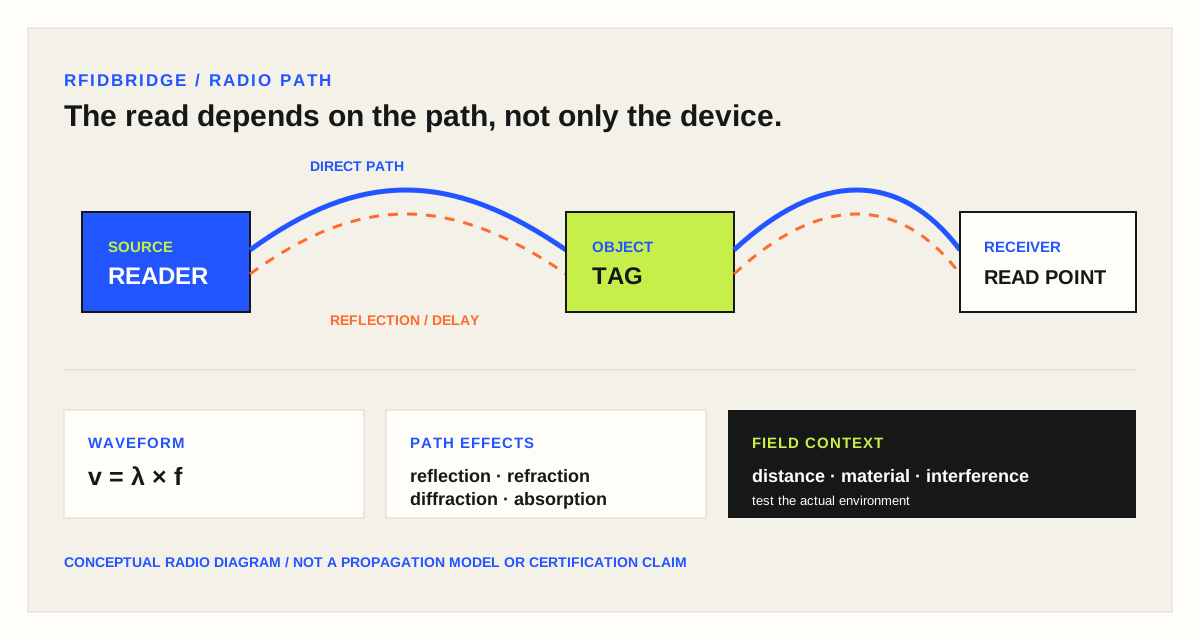
Radio-wave behaviour, material and reflections all shape what an RFID reader can observe in its interrogation zone.
Read the note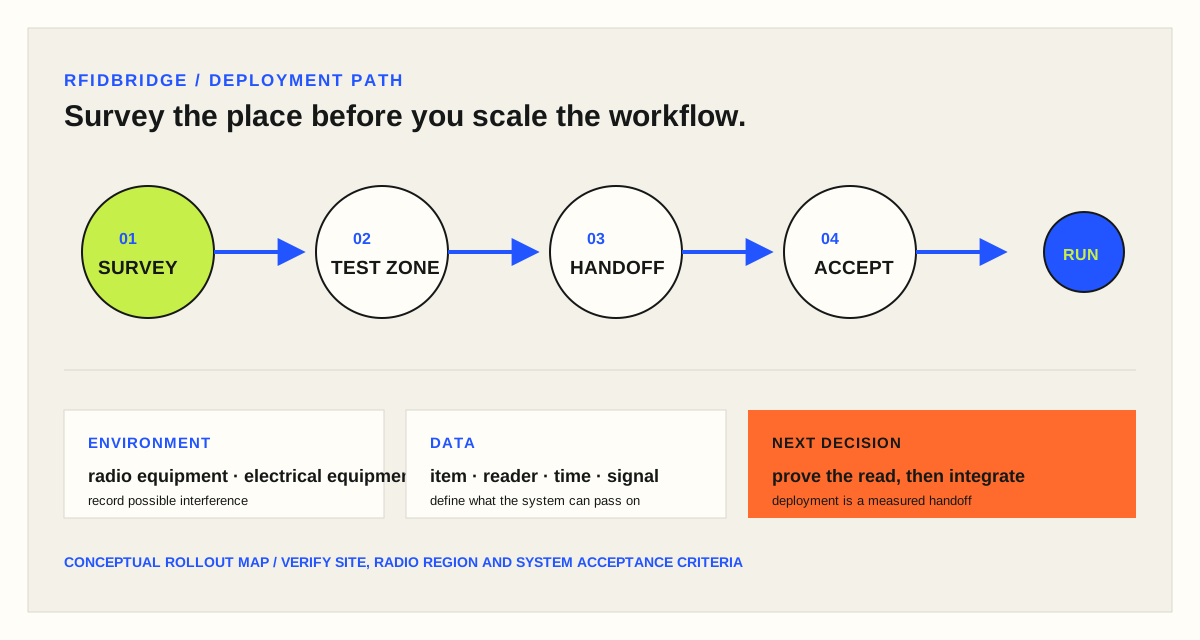
An RFID deployment connects read events to other systems, so the site, interference and data handoff need to be checked together.
Read the note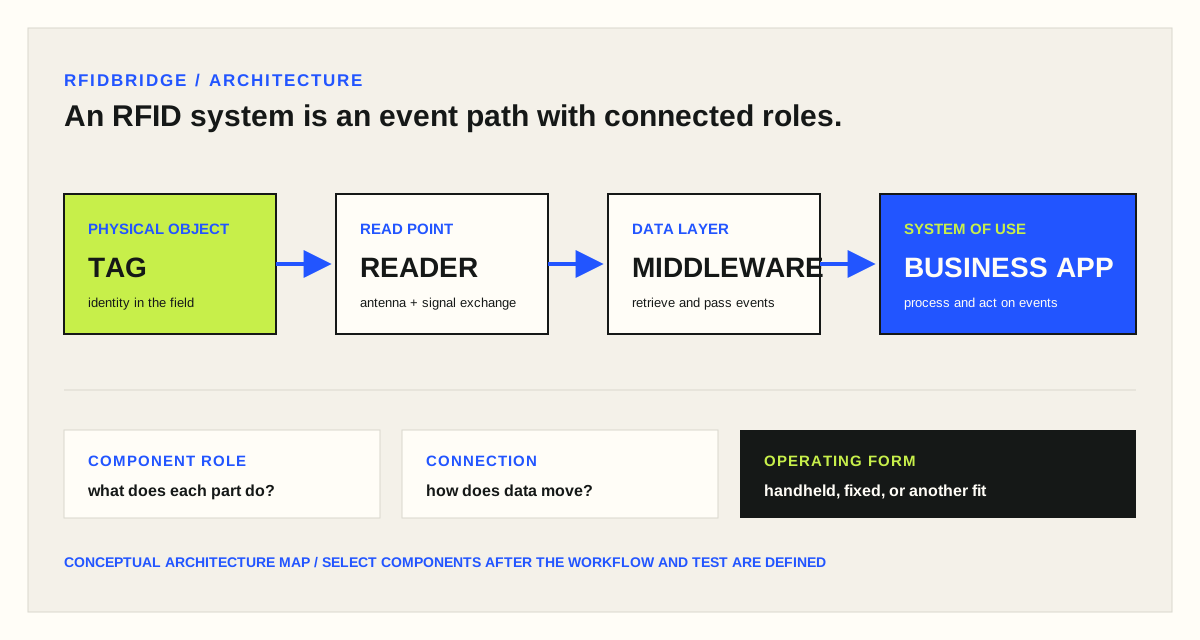
Map tags, readers, antennas, cables and middleware before deciding how RFID data will reach the system that uses it.
Read the note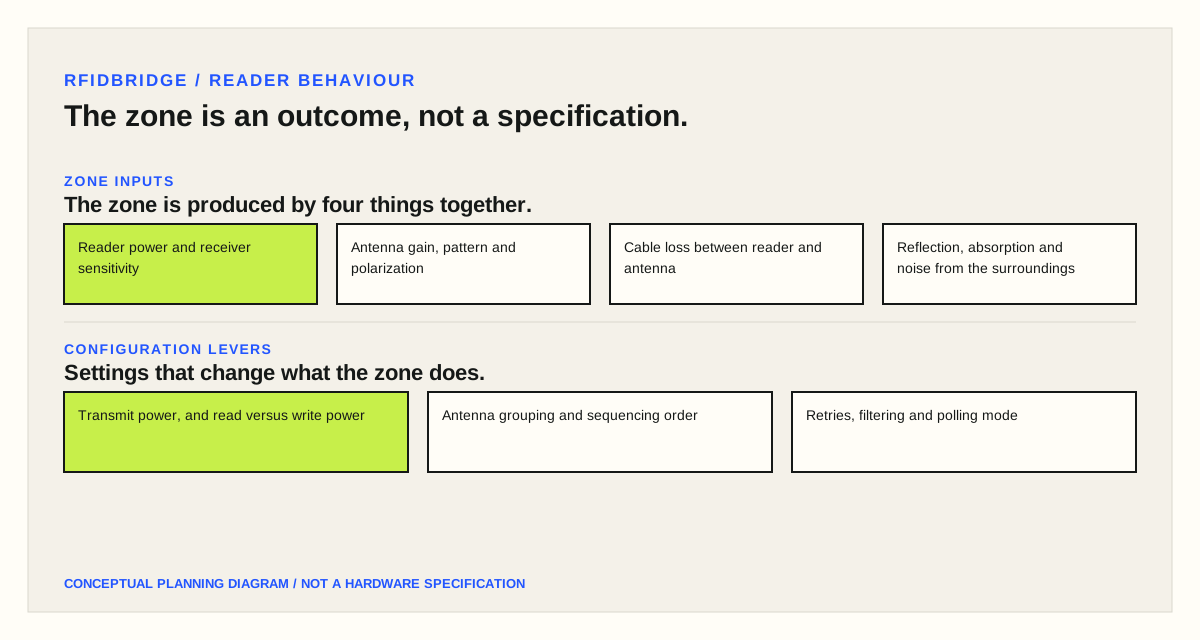
The interrogation zone is an outcome of reader power, antenna pattern, cable loss and the surrounding material — not a fixed distance printed on a datasheet.
Read the note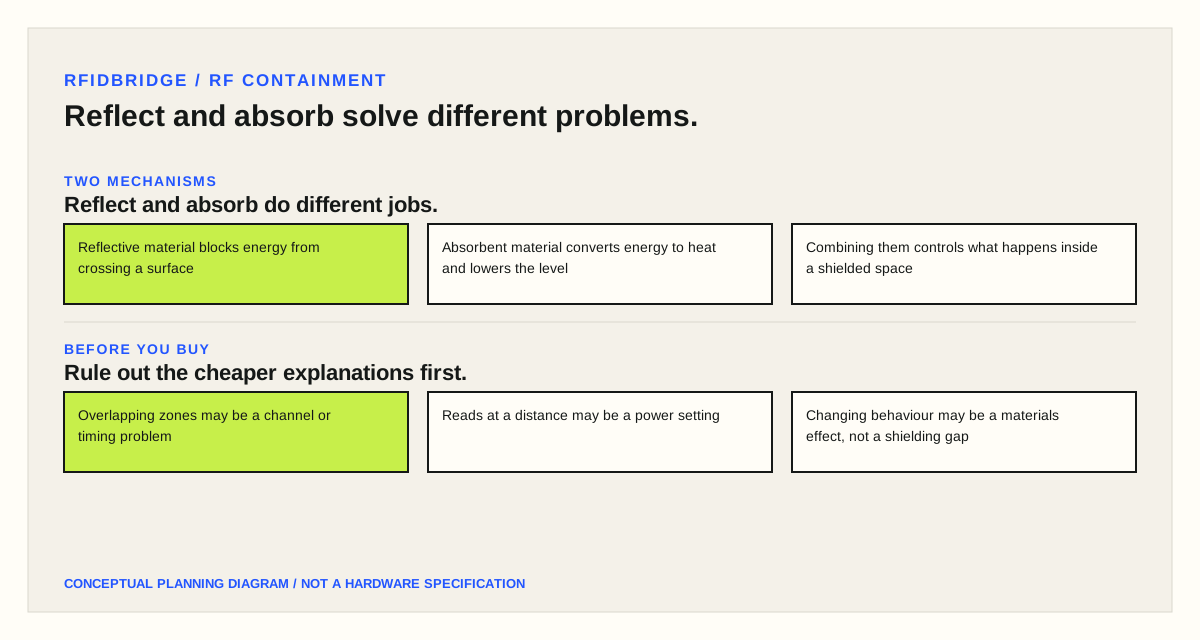
Shielding material, absorbent material and reader configuration solve different versions of the same problem — a read that escapes its zone or a signal that intrudes into it.
Read the note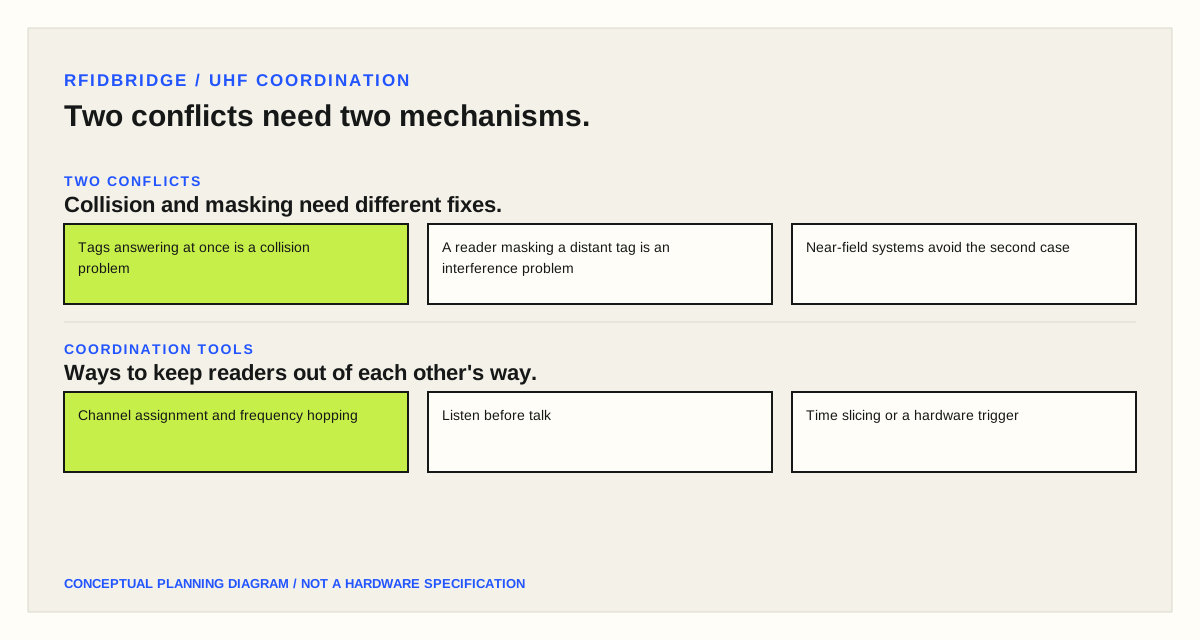
Tag-to-tag collision and reader-to-reader interference are separate problems with separate mechanisms; Gen2 addresses the first with anti-collision and the second with reader operating modes.
Read the note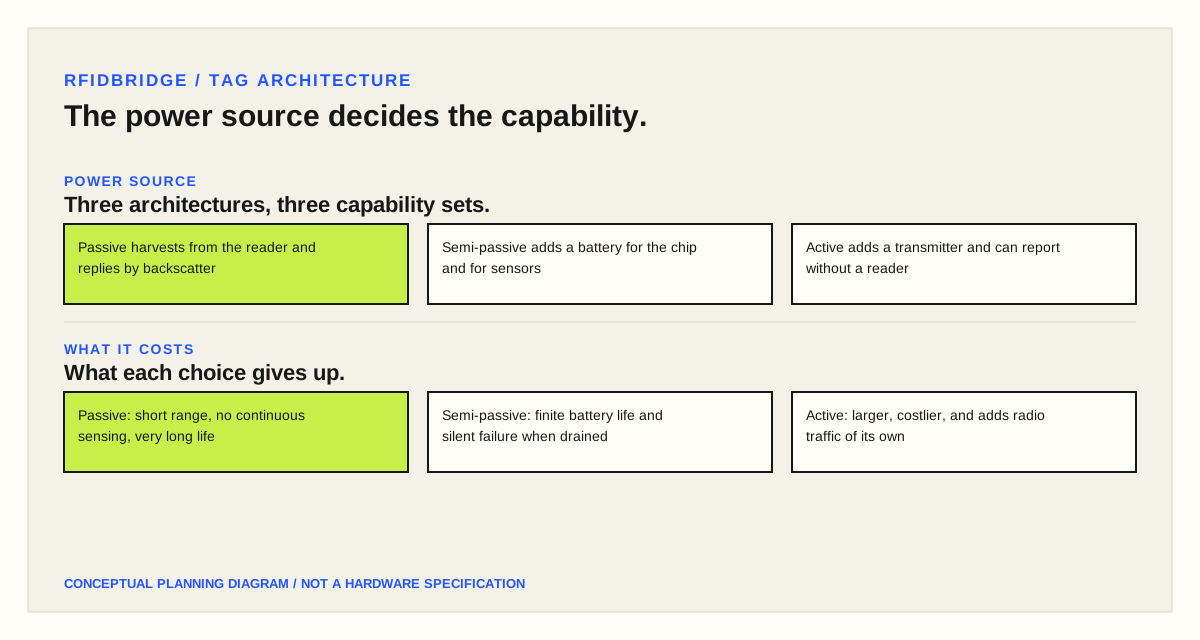
The power source decides a tag's read range, whether it can carry a sensor, how long it lasts and whether it adds radio noise — so it is the first selection question, not the last.
Read the note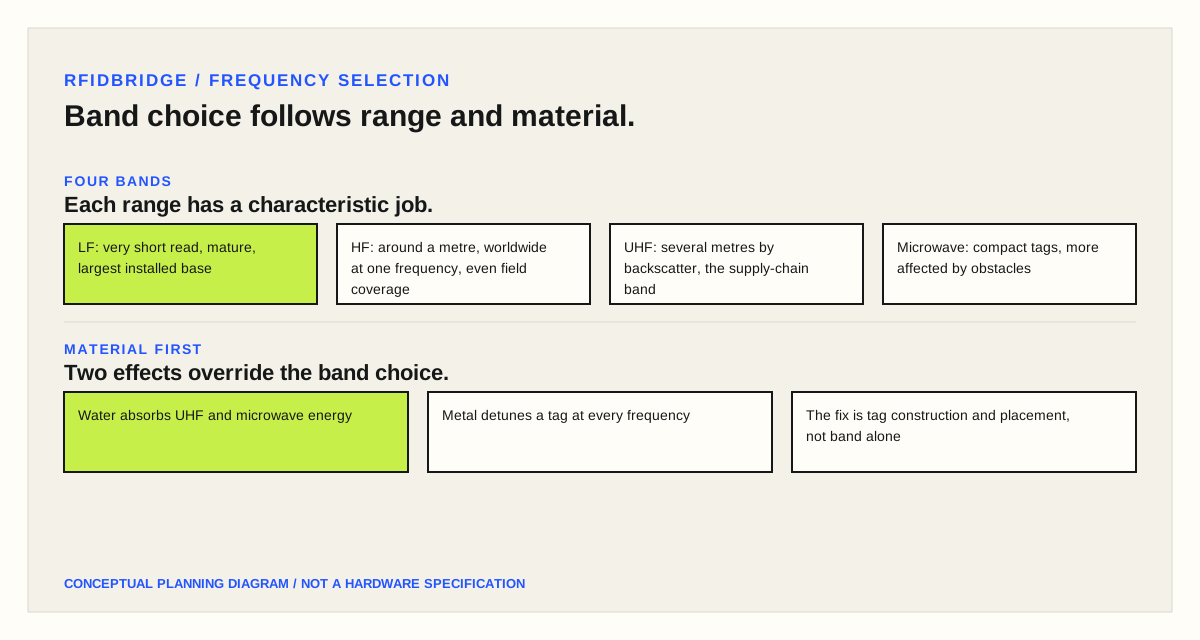
Frequency decides read range, how the tag couples to the reader, and how water and metal affect it — the three constraints that shape tag selection more than any other.
Read the note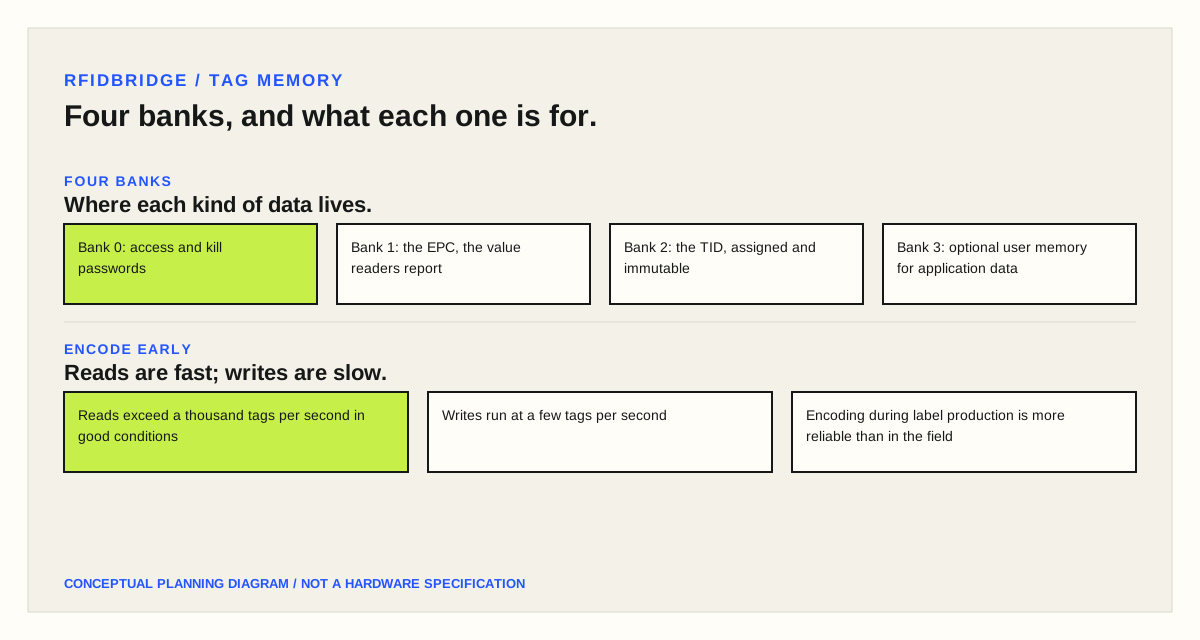
Encoding writes data into a tag's chip memory. Which bank it goes into decides whether it can be changed, who assigned it, and whether the tag can be killed after purchase.
Read the note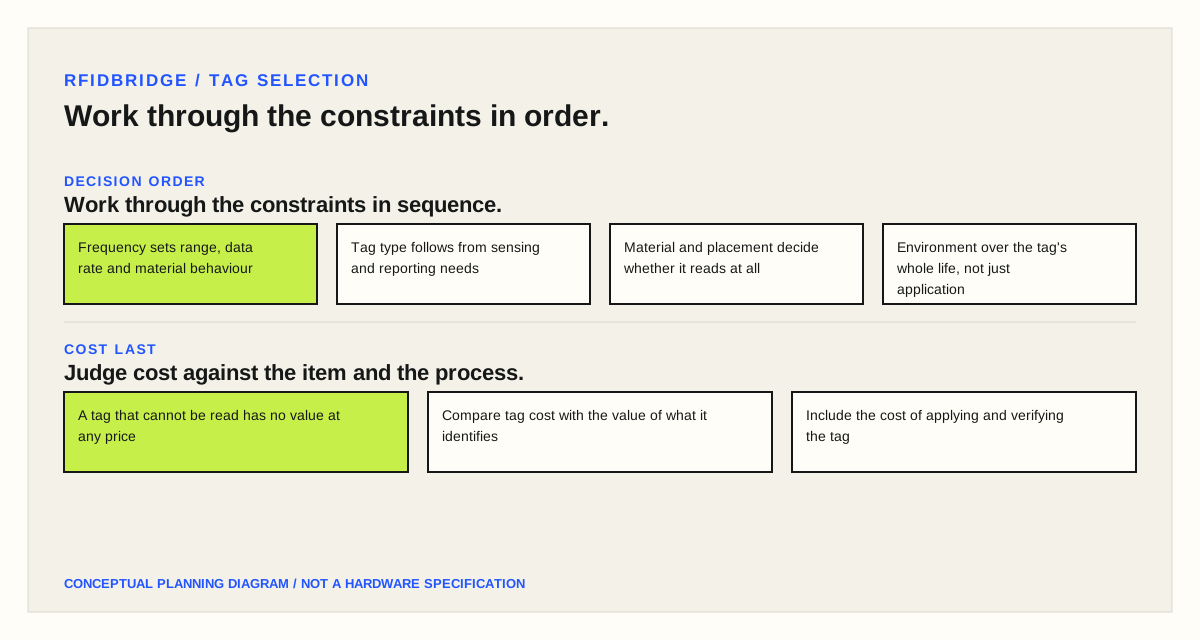
Frequency, tag type, material, orientation, placement and environment decide whether a tag works. Cost comes after those, because a cheap tag that cannot be read is not cheap.
Read the note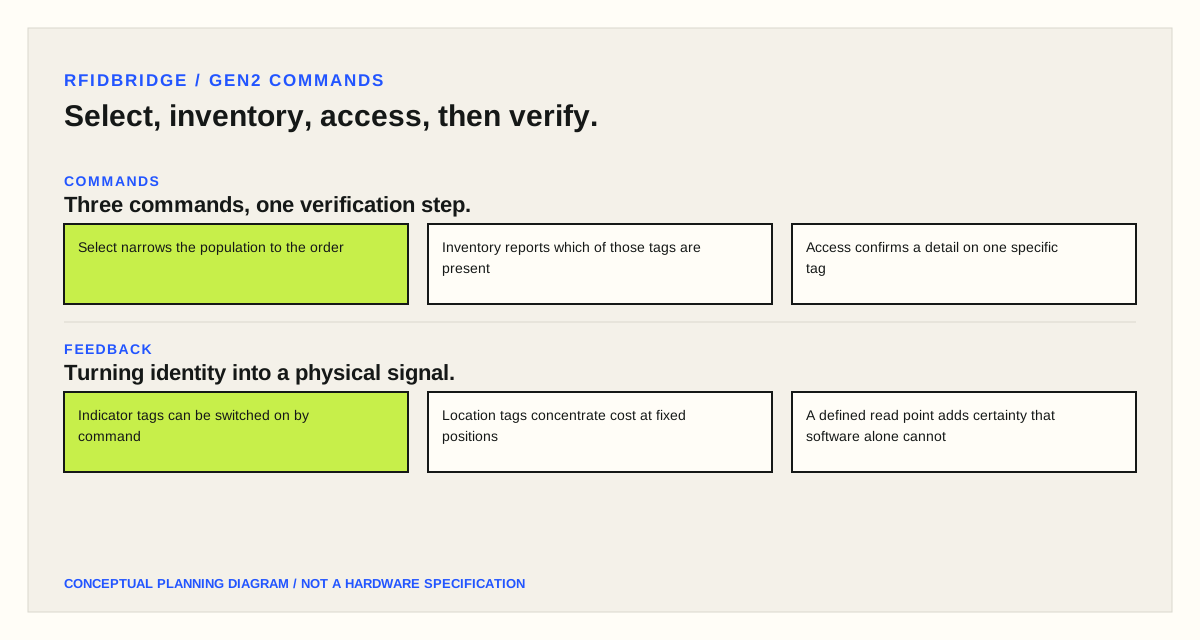
Pick-and-pull workflows use Select, Inventory and Access commands plus indicator tags to confirm that the item taken matches the item requested, at the point of the action.
Read the note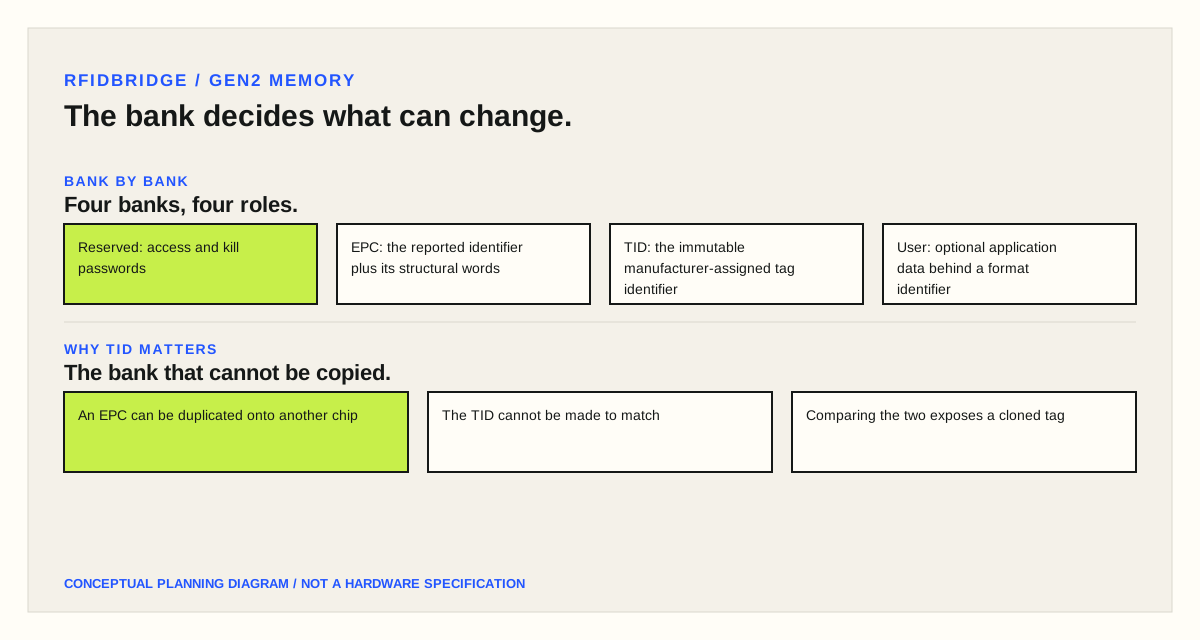
Gen2 organises tag memory into reserved, EPC, TID and user banks. The bank decides whether a value can be changed, who assigned it, and whether it survives the point of sale.
Read the note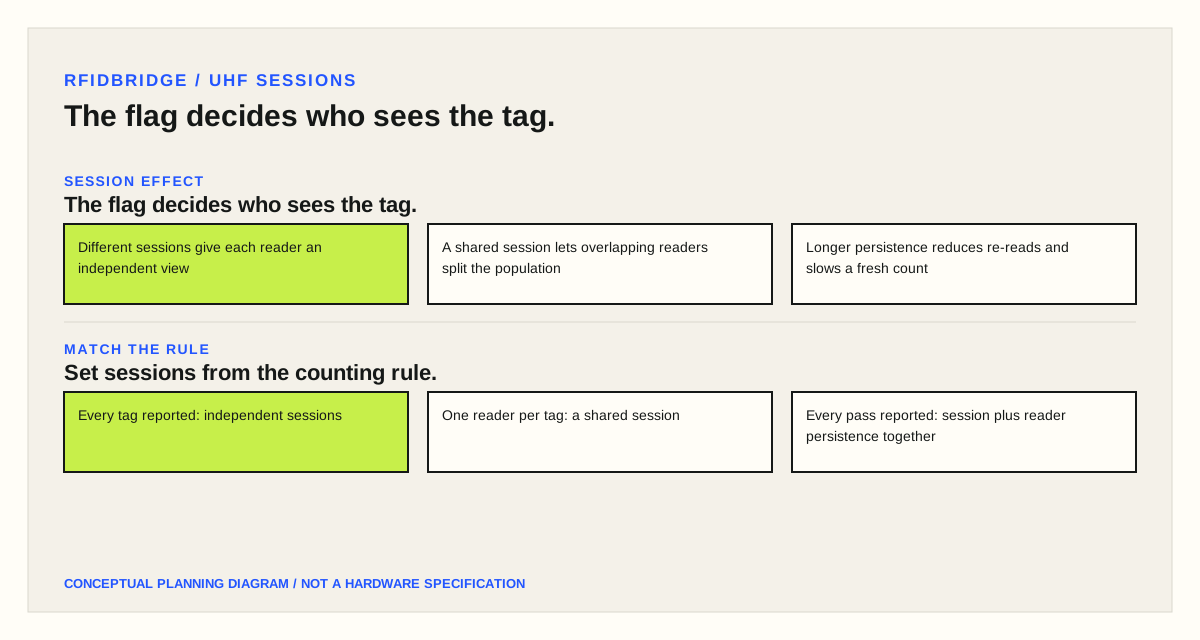
A Gen2 session is a flag state the tag keeps between inventory rounds. Which session a reader uses decides whether it re-reads tags it has already seen, and whether tags it cannot reach go quiet.
Read the note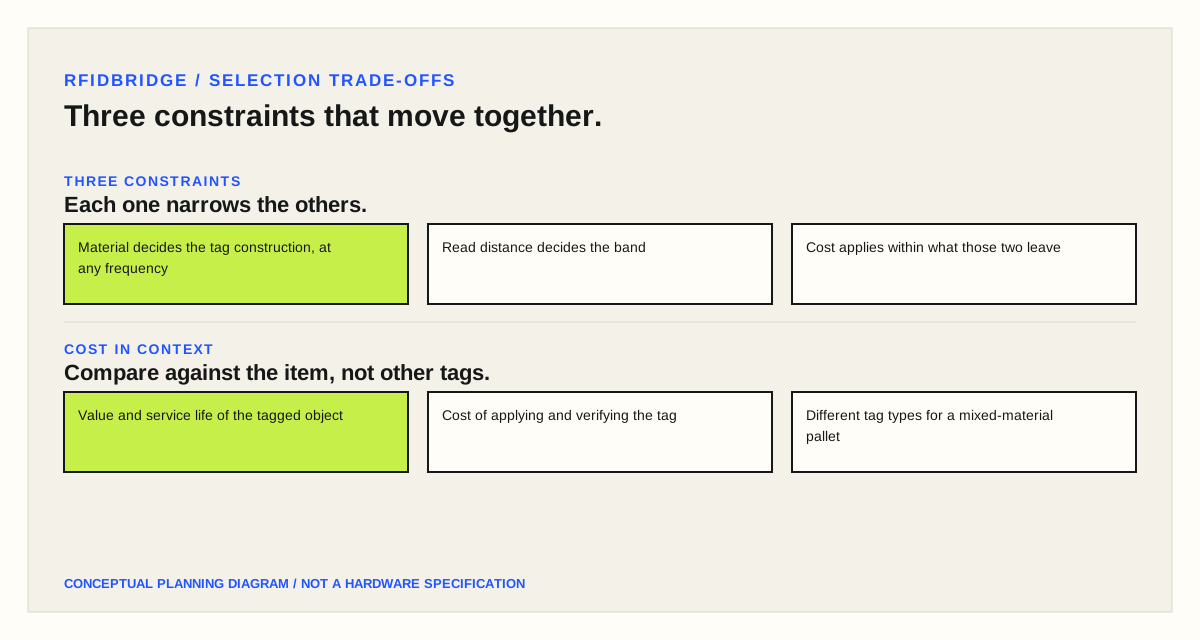
Cost, material and frequency constrain each other. Fixing any one of them first narrows the other two, which is faster than comparing tag catalogues.
Read the note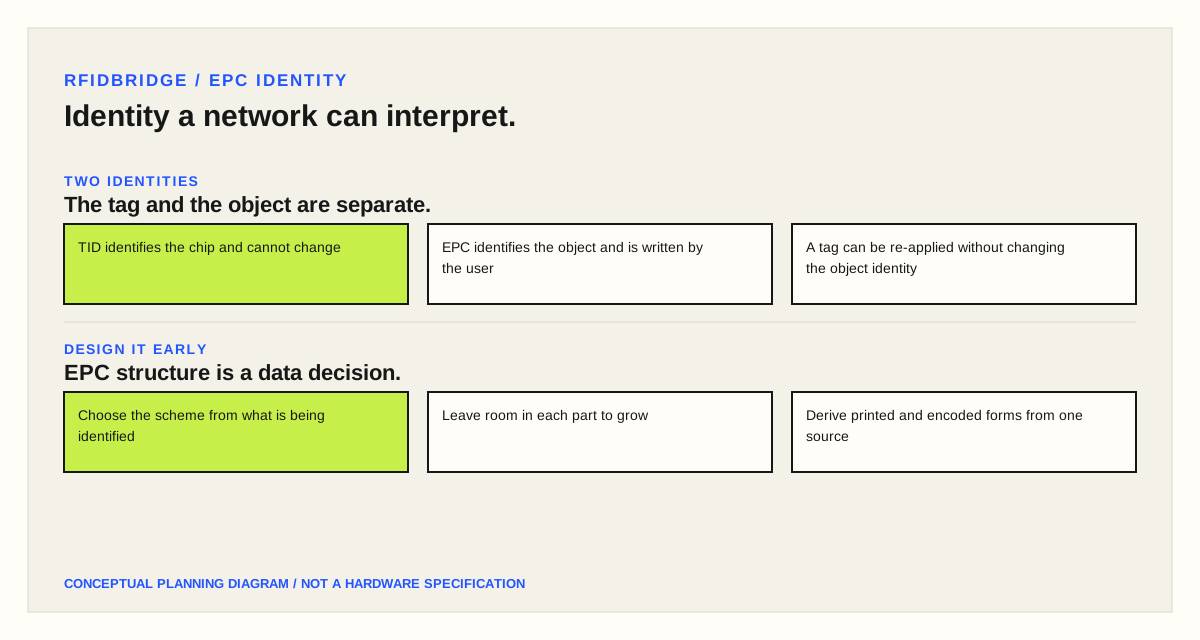
The Electronic Product Code is a structured identifier that a reader reports and a network can interpret. It identifies the object, not the tag, and its structure is what makes it portable between systems.
Read the note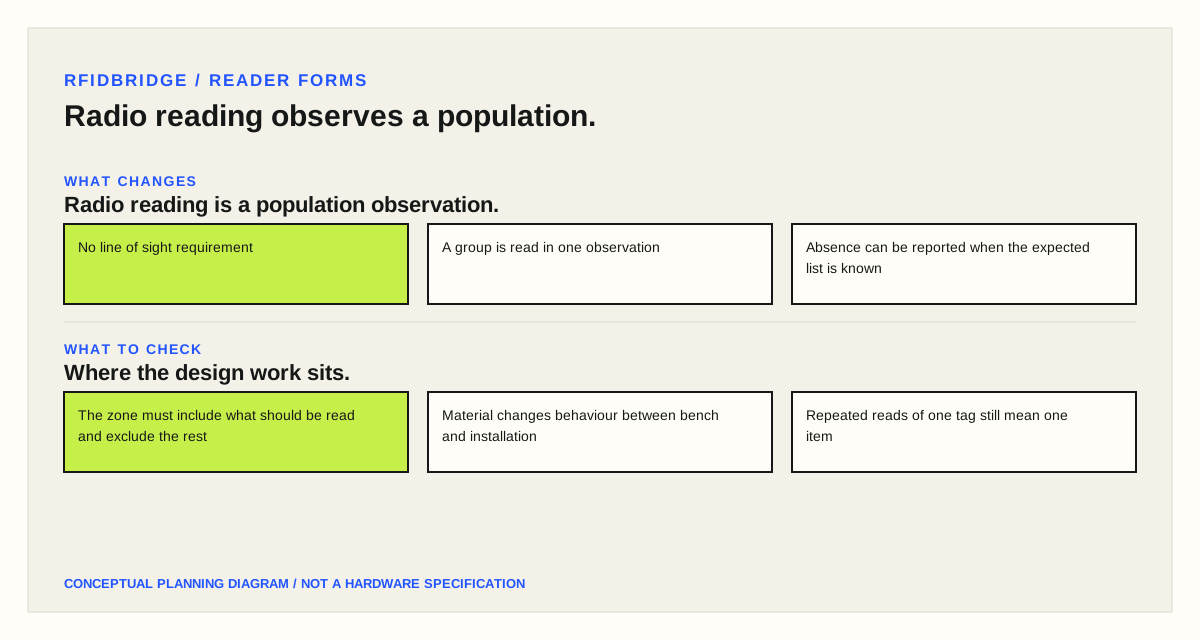
An RF scanner reads tags by radio rather than by line of sight. The difference changes what a scan step can be, not just how fast it runs.
Read the note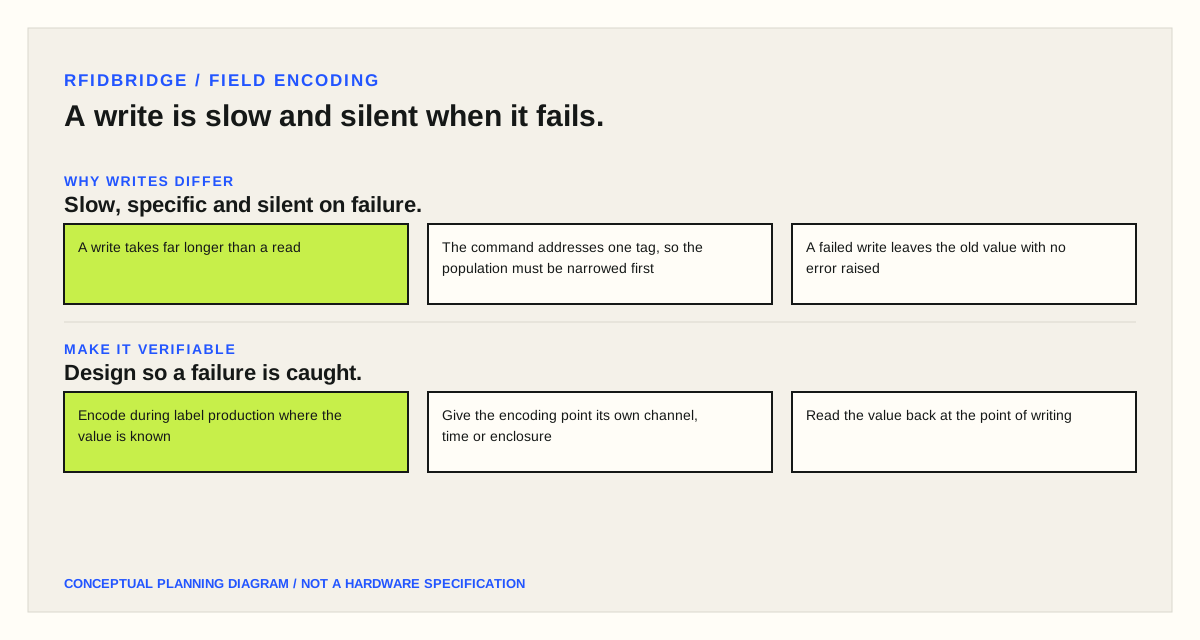
Writing to a tag is slow and silent when it fails. In a dense reader environment the write has to be isolated, verified and repeated under control.
Read the note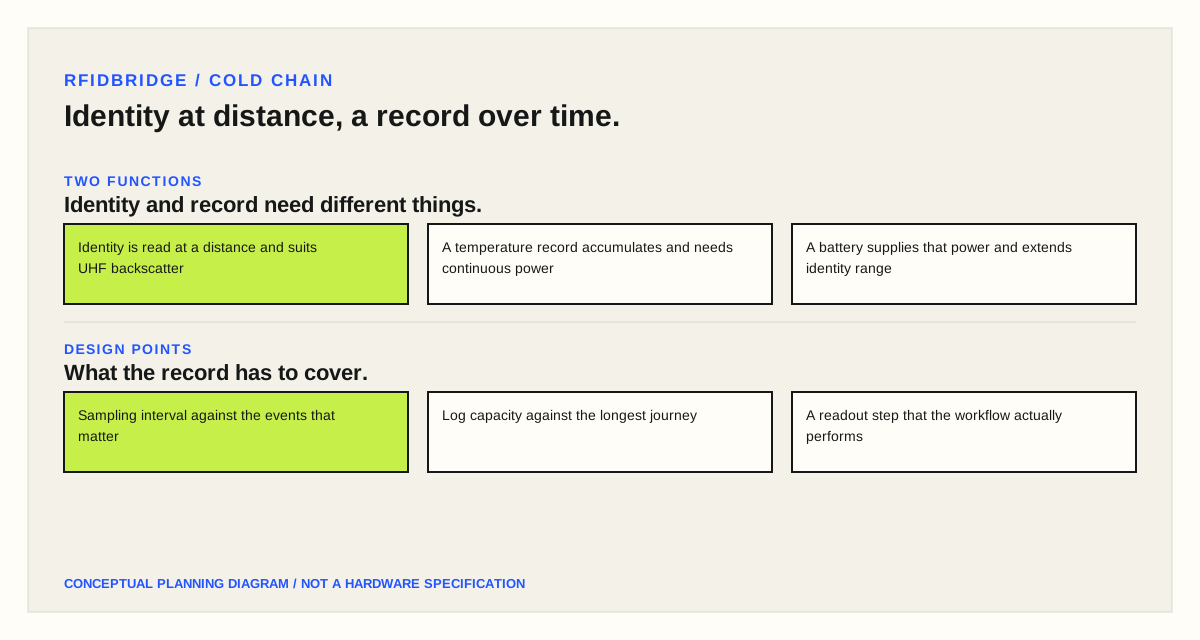
A dual-frequency tag pairs a UHF identity that can be read across a site with a sensing element that logs temperature over time, which is why the two functions use different bands.
Read the note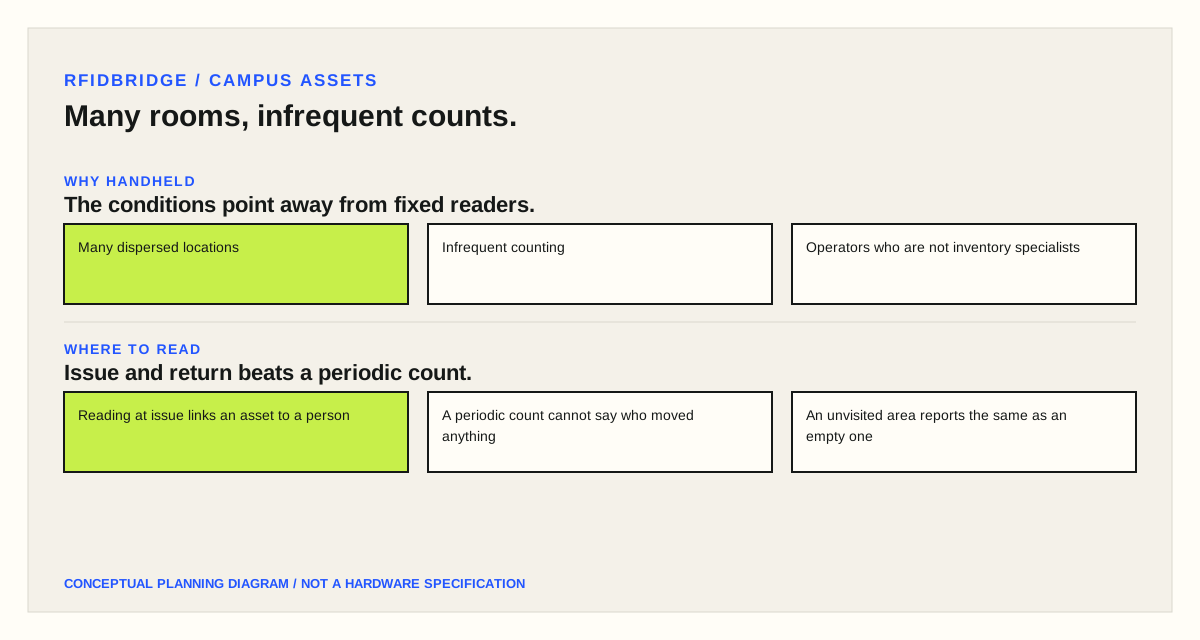
Educational asset tracking is defined by many rooms, movable items and infrequent counts — conditions that favour handheld reading and a location record over fixed infrastructure.
Read the note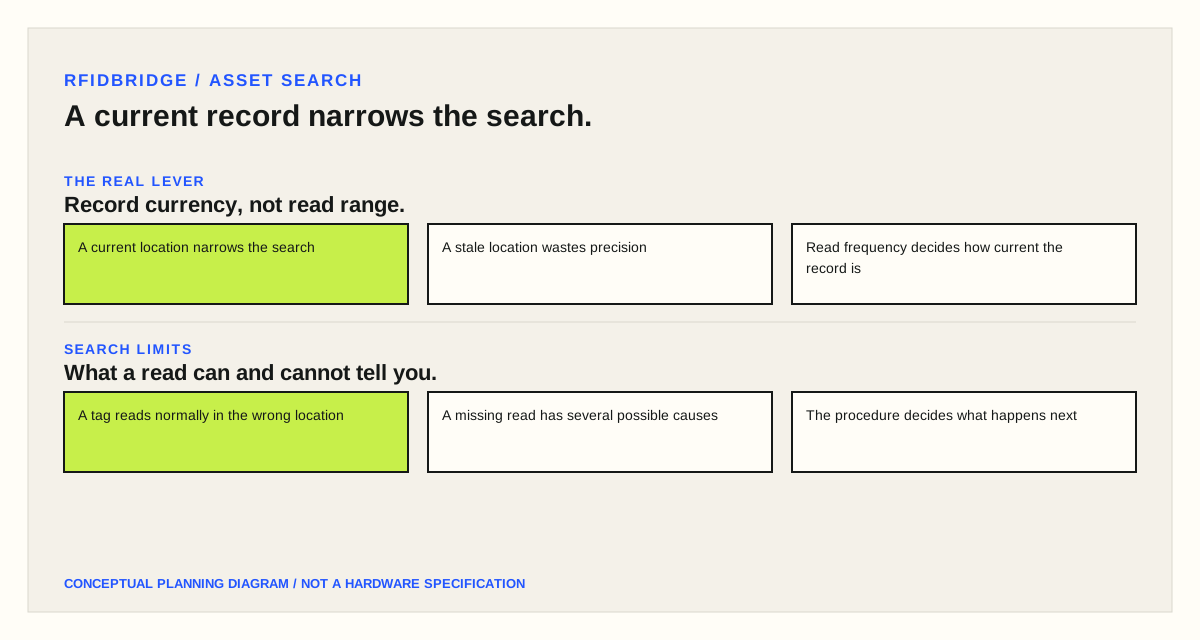
Finding lost equipment is a search problem. It is solved by a location record that is current enough to narrow the search, not by a more sensitive reader.
Read the note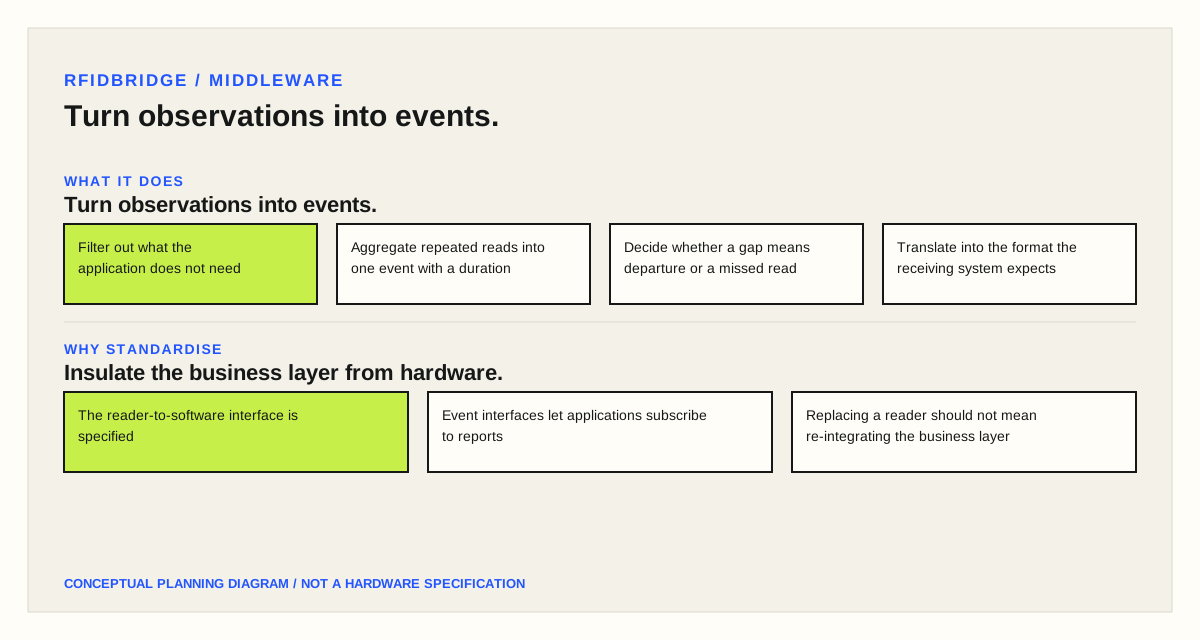
A reader produces far more observations than a business system can use. Middleware filters, aggregates and converts them into events the receiving application understands.
Read the note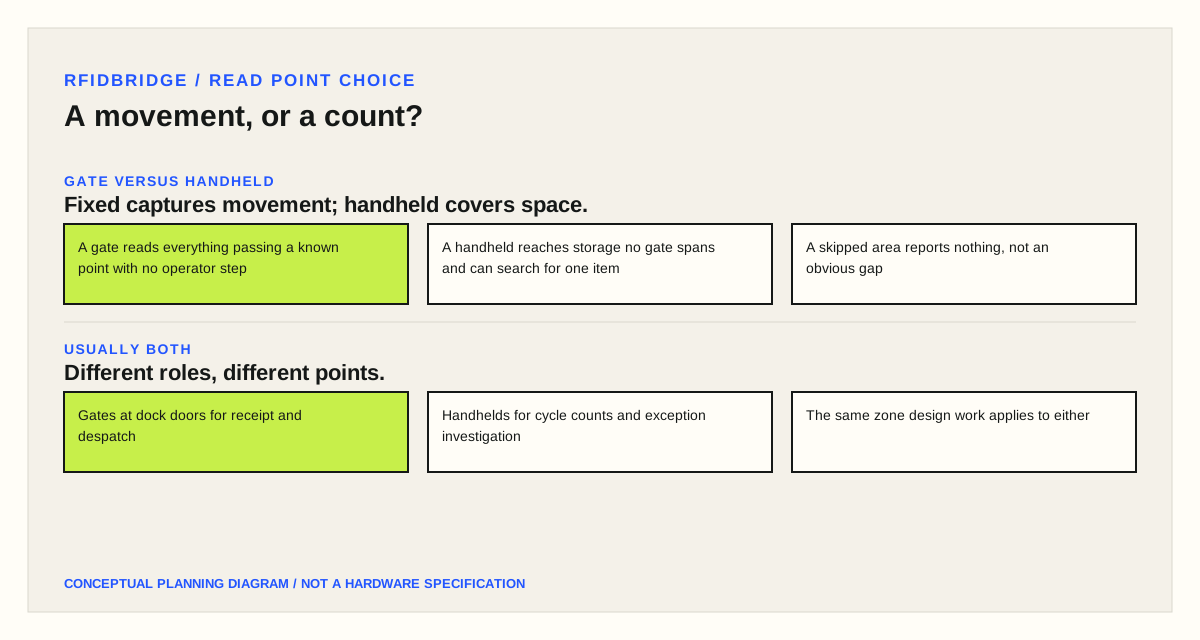
A gate reader reads what passes a fixed point; a handheld reads what an operator walks past. The choice follows from whether the inventory event is a movement or a count.
Read the noteA warehouse record stays honest when each physical movement creates exactly one event at a defined point — and when the system can reject the reads that should not become movements.
Read the note
Kitchens combine metal, liquid, cold storage and heat, which is the least forgiving set of conditions for passive UHF. The useful question is which items repay tagging and which need a different method.
Read the note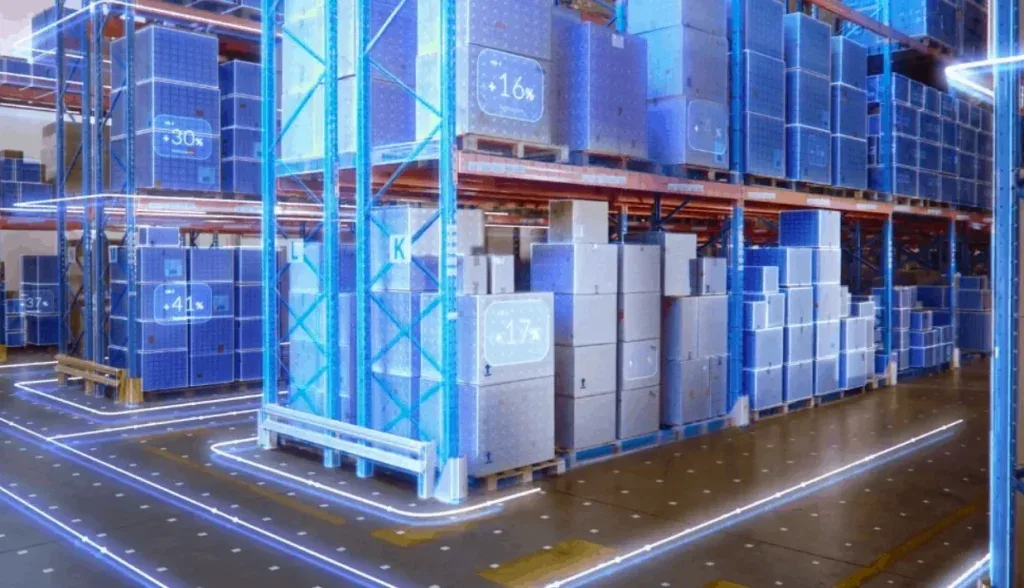
A stockout is usually a record problem before it is a supply problem. Item-level identity makes the difference between knowing what is on hand and knowing what is actually available to promise.
Read the note
The requirements that decide whether a small operation gets value from tracking are about movement, tolerance and ownership — and they are worth writing down before any hardware is compared.
Read the note
A portal that detects every tag can still fail operationally. Acceptance should be defined by the false events it refuses to create, and tested with negative cases before go-live.
Read the note
A wrong stock figure is rarely one mistake. It is the accumulated result of movements that happened without being recorded and records that were written without a movement.
Read the note
Manual counting is not expensive because of the counting. It is expensive because of the interruption, the transcription, the errors it leaves behind and the decisions made against a figure that was already old.
Read the note
Frequent partial counting corrects drift while it is still traceable. Bulk capture makes that rhythm affordable, and the design decisions that follow are about scope, tag level and what counts as an exception.
Read the noteA store that only counts what left without payment misses the larger share of its shrinkage, which is stock that was never where the record said it was.
Read the noteDays of inventory is a ratio, and a ratio can be improved two ways. Only one of them makes the business better, and telling them apart requires a record accurate enough to distinguish forecast from measurement.
Read the noteThe first count sets the baseline every later movement is measured against. An error in it does not stay a fixed offset — it propagates into every reconciliation that follows.
Read the note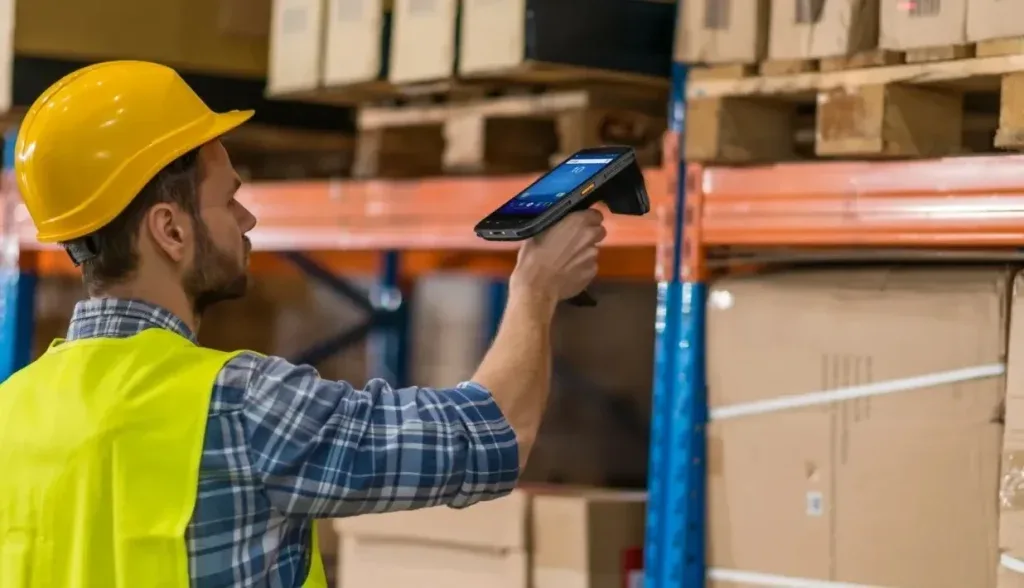
In e-commerce the stock record is published directly to buyers, so an error is not an internal discrepancy — it is a promise made on the business’s behalf and then broken.
Read the note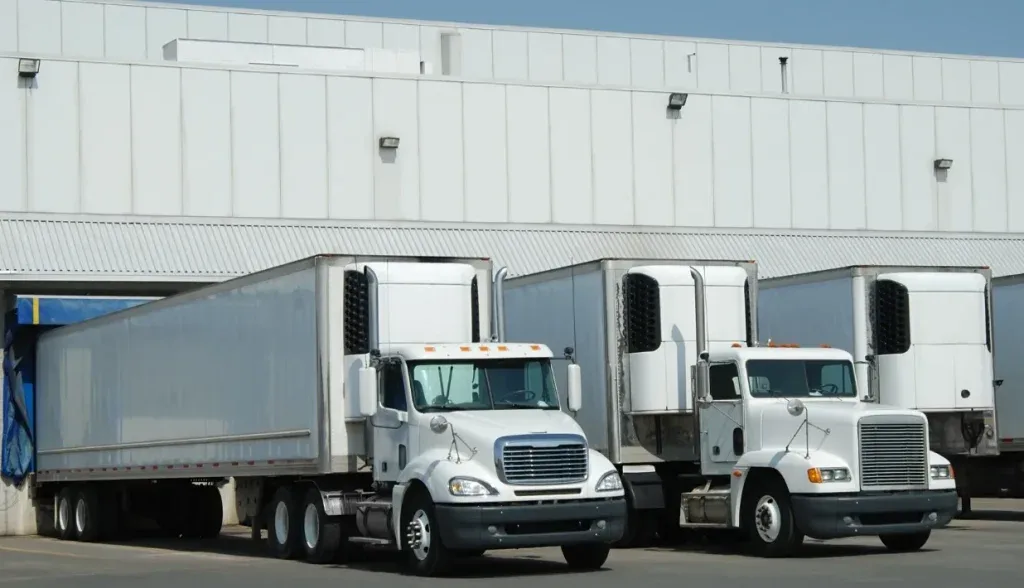
A reader captures observations and a warehouse system needs business events. Most integration failures are that gap, not a hardware fault.
Read the noteA small operation gets value from the feature it will actually use, the integration it can maintain, and a cost per unit it can carry as it grows — not from the longest capability list.
Read the note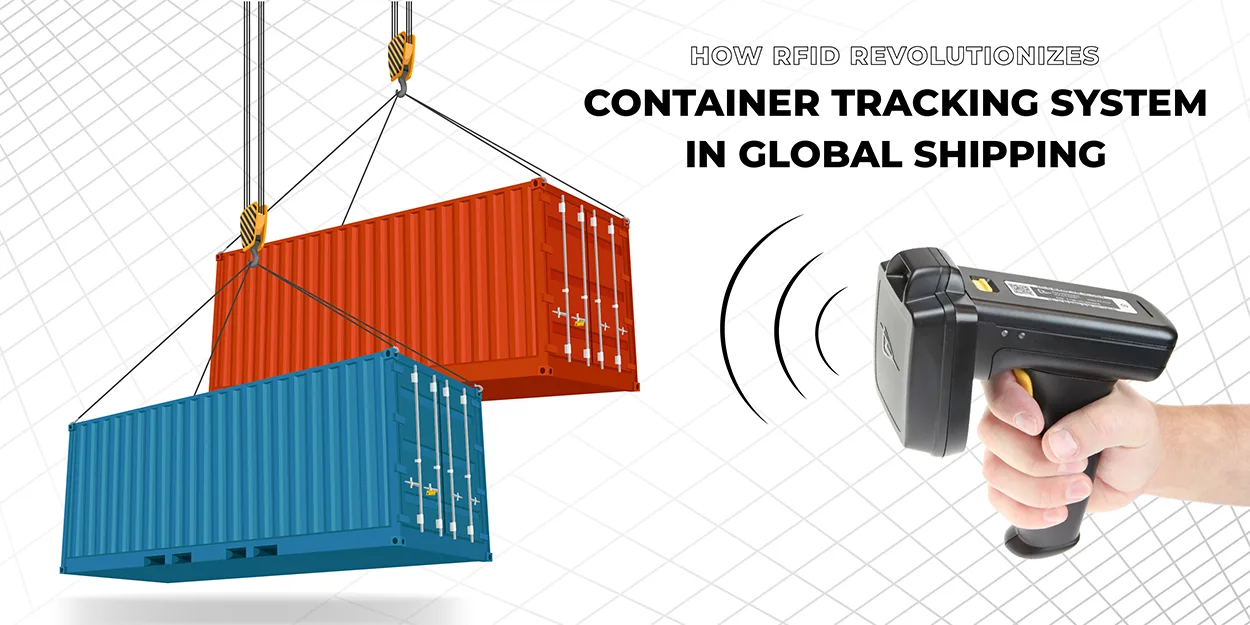
A shipping container is a large, stacked, metal asset in constant motion across jurisdictions. Tracking it is not continuous measurement but a series of reliable milestones at fixed points.
Read the notePaper is not the problem; the transcription between paper and system is. The first useful change is the one that removes the handover, not the one that removes the walk.
Read the noteSlow-moving stock is only cheap while nobody is looking at it. Identifying it early enough to act depends on knowing its age and rate of movement, which a rare count cannot provide.
Read the note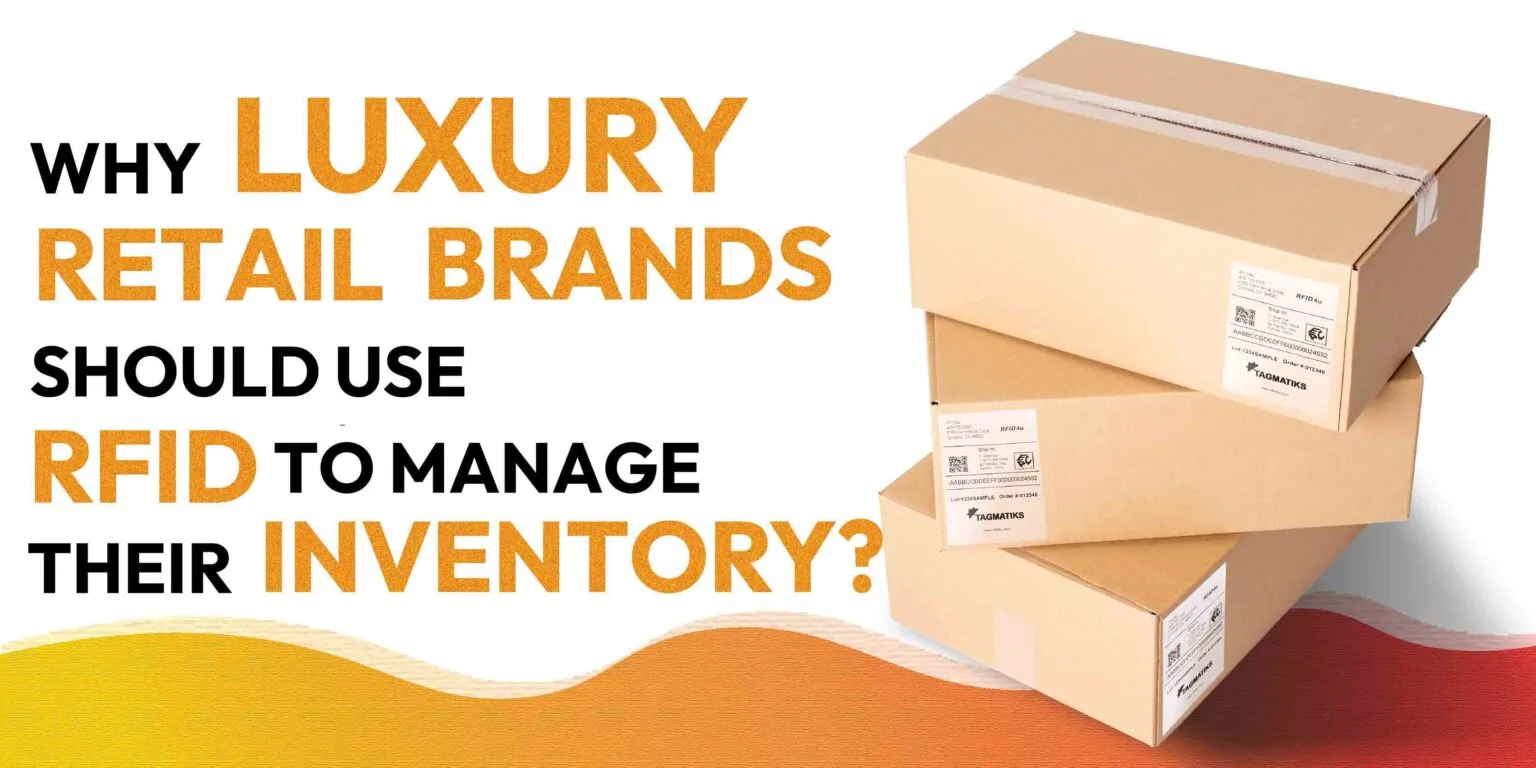
When every unit is expensive and some are unique, a quantity-based record cannot answer the questions the business runs on — which piece, in which store, in what condition, and is it genuine.
Read the note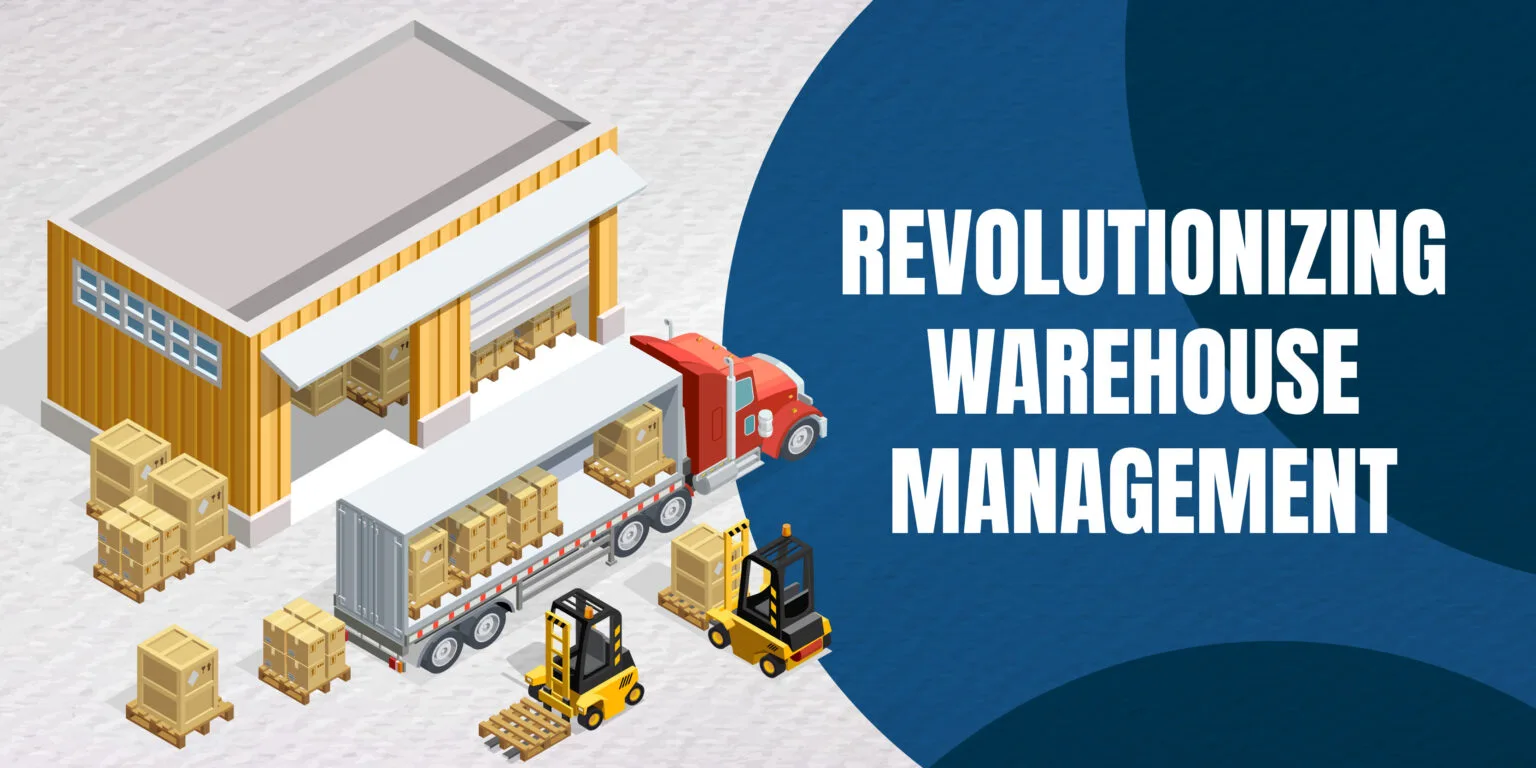
Receiving, picking, dispatch and asset control all depend on knowing which specific thing moved. A shared identity across those processes is what makes the record continuous rather than departmental.
Read the noteA proof of concept is not a demonstration that the technology works. It is a controlled measurement that answers a question the business has already decided to act on.
Read the note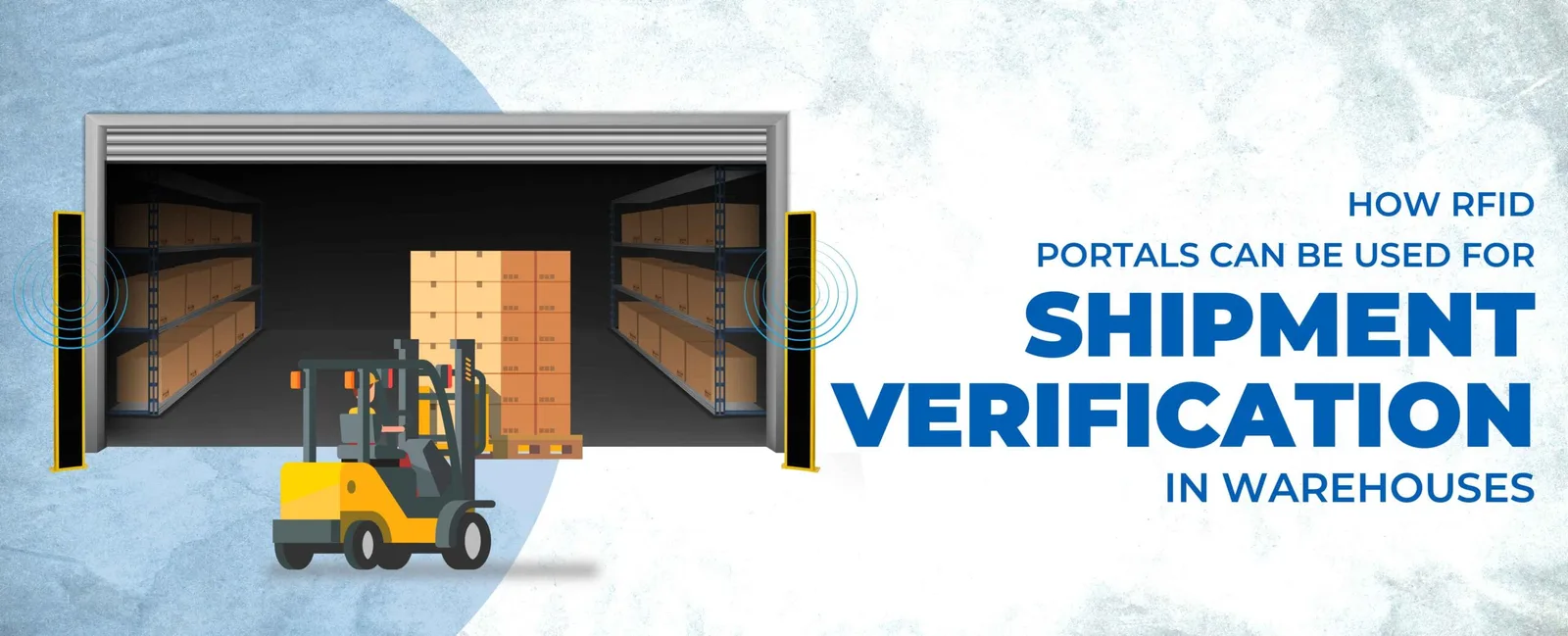
A portal at a dock door compares what arrived against what was expected. Deciding what that comparison should produce — and what it should refuse to conclude — is the design work.
Read the noteA turnover ratio is only as good as the average inventory it divides by. Continuous counting replaces an estimate built from two snapshots with one built from the actual movement history.
Read the note
A warehouse system moves goods and a planning system holds commitments. What passes between them is not inventory data but a small set of events, and the design is in choosing which.
Read the note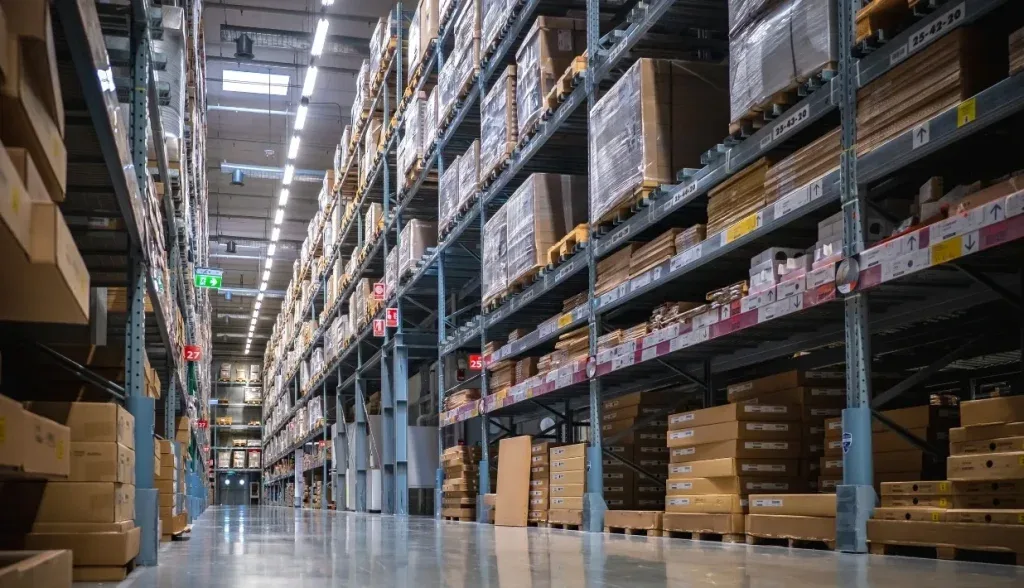
A rental asset leaves and returns many times, and each transaction is the moment its condition and completeness are decided. Bulk capture changes what can be verified while the hirer is still present.
Read the noteThe useful comparison is not which technology is better but which is cheaper for a given counting job — and the jobs where a barcode remains the right answer are worth naming.
Read the note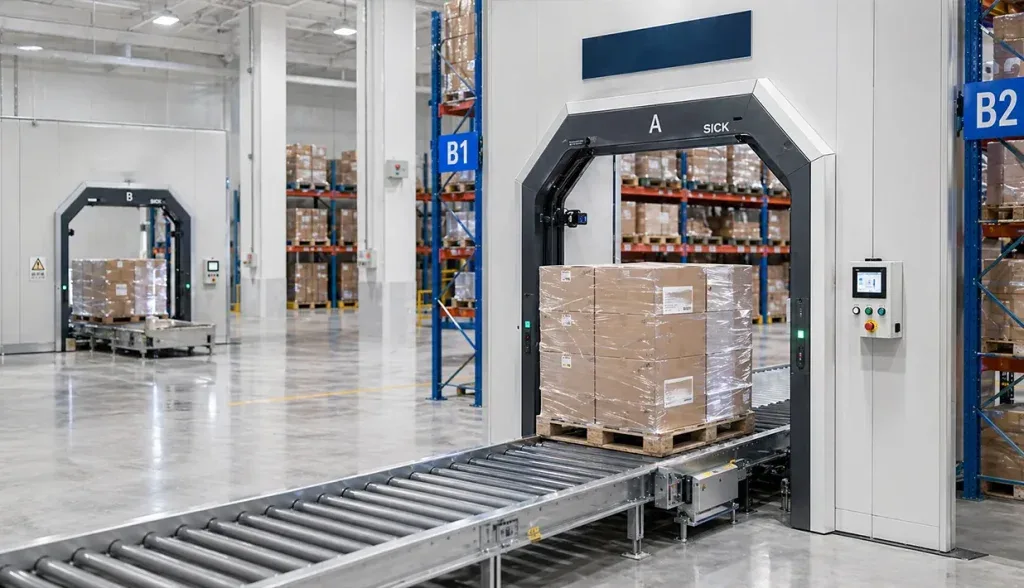
A migration is a sequence of decisions about what to tag first, which processes to move, and what runs in parallel — and the parallel period is where most of the risk sits.
Read the noteA variance found at a count is not evidence of theft. Splitting it into disappearance, misplacement and record error is what makes the loss addressable.
Read the note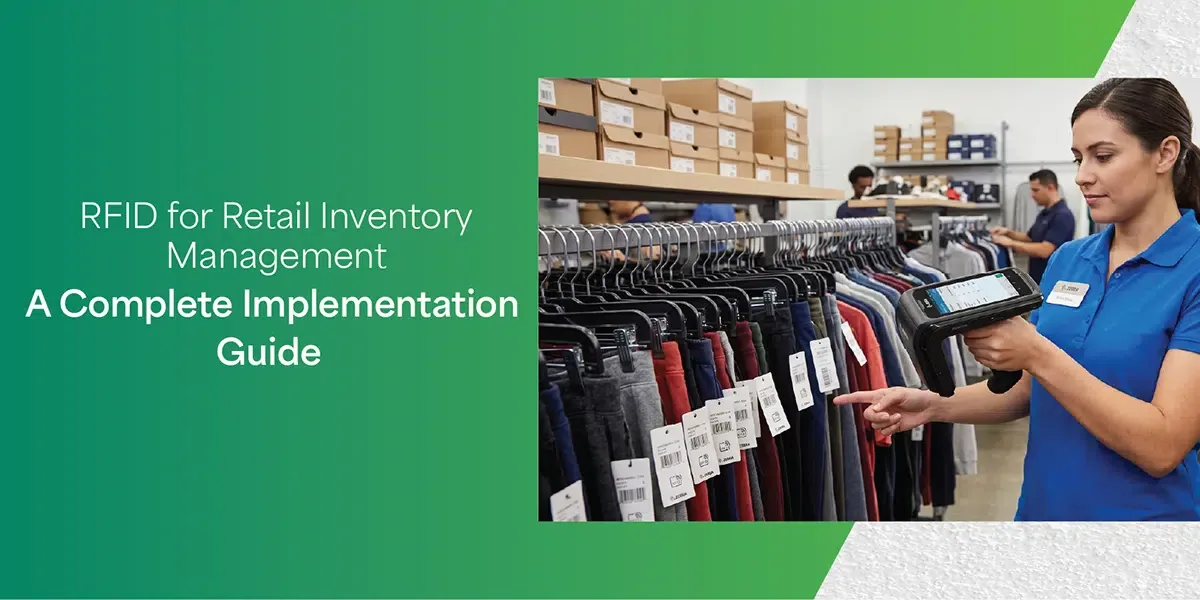
A retail deployment moves from tagging to counting to the sales floor. Getting the sequence right matters more than getting any single stage perfect.
Read the note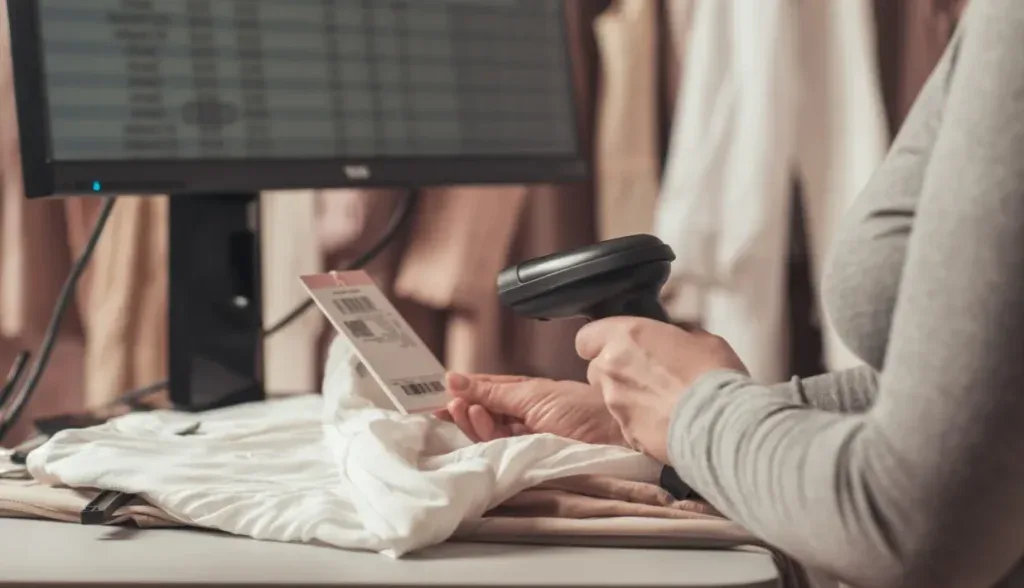
Fashion moves in seasons and in sizes, and the warehouse system is what turns a count of tagged garments into decisions about what to ship, hold or consolidate.
Read the note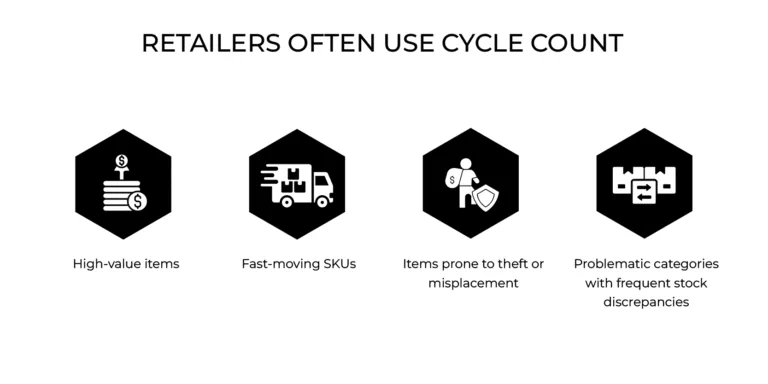
A store cannot close to count. A count that happens in pieces, alongside trading, is what keeps a retail record current — and its design is about scope and rhythm, not speed.
Read the note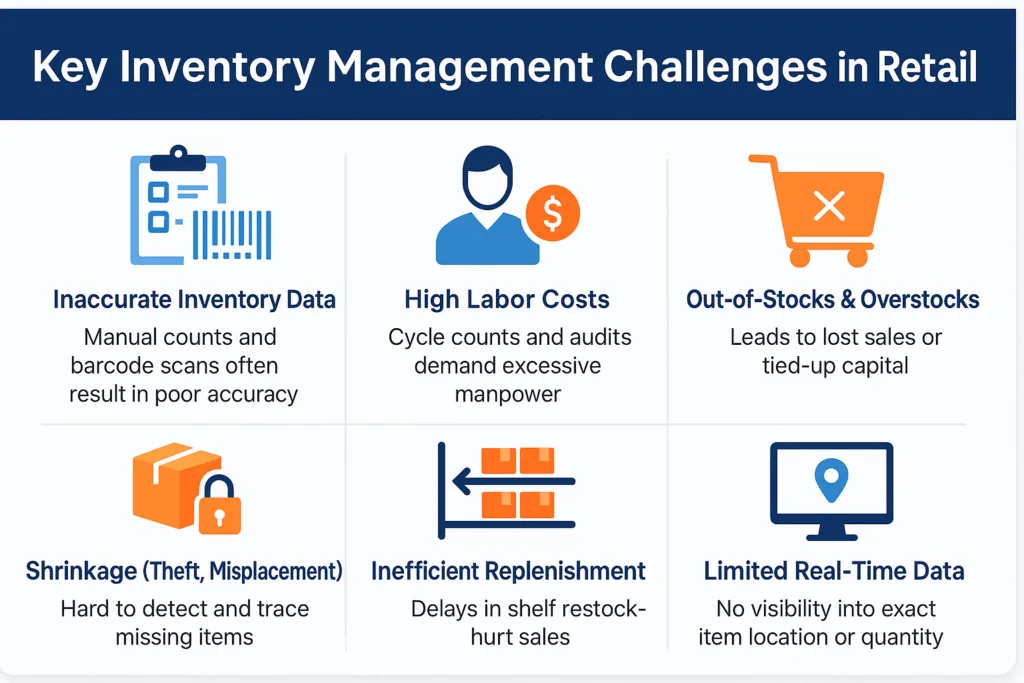
A retail record exists to answer a small set of questions — what can be sold, where it is, what to reorder, and what went missing. Designing for those questions is more useful than designing for accuracy in general.
Read the noteAutomation assumes a system that already knows what is where. Building that awareness first is a smaller project, and it is the one the automation depends on.
Read the noteA garment is tagged once and read at several points on its way to a shopper. The handovers between warehouse and store are where the record most often breaks.
Read the noteA tag that can be told to light up turns a search into a direction. It suits dense storage and small items, and it needs the read zone to be precise about which tag it addresses.
Read the note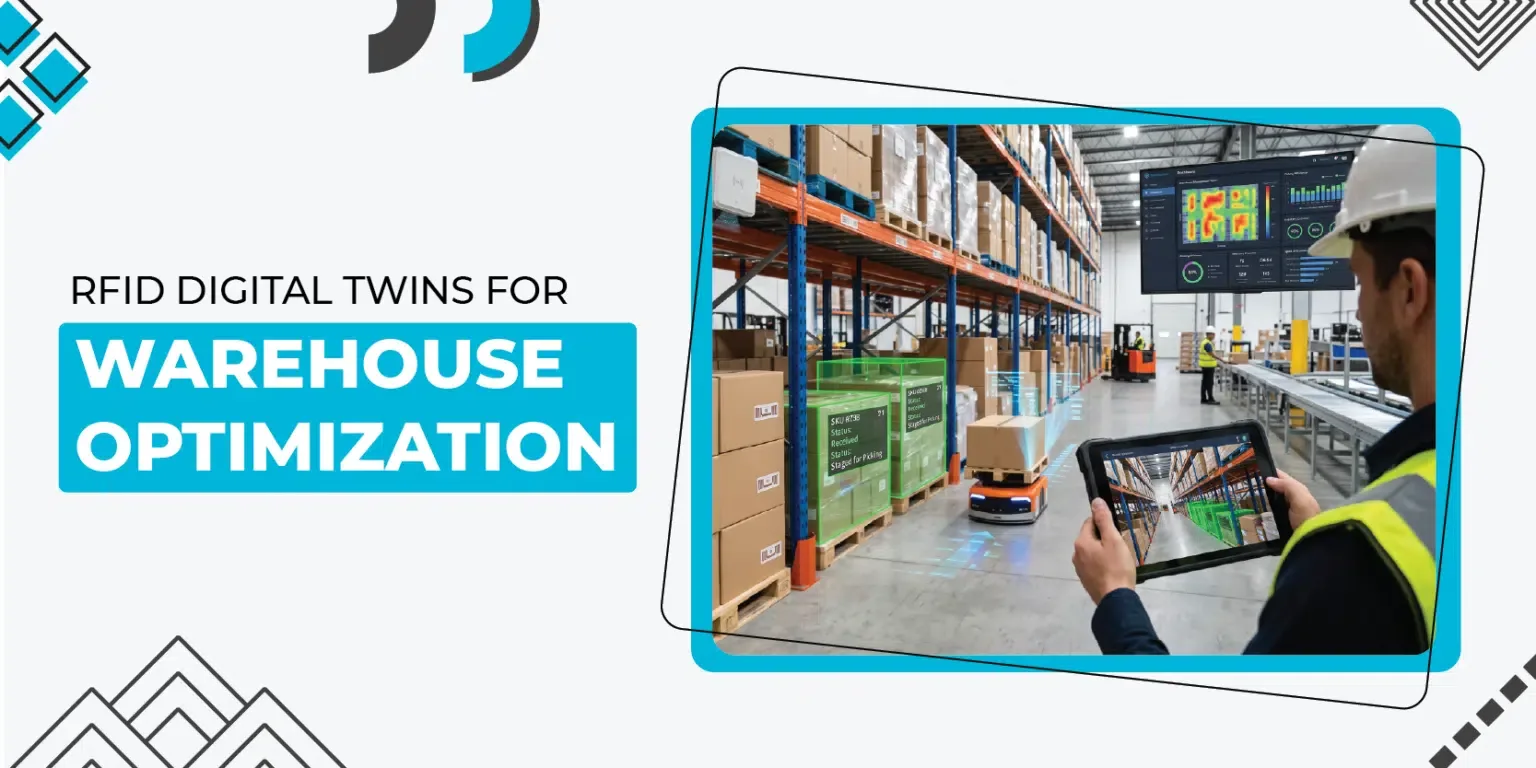
A simulated warehouse is only as good as the data feeding it. The parts of a twin that work are the ones grounded in continuous capture rather than in periodic counts.
Read the noteMost disappointing deployments are not hardware failures. They are frequency, placement, material, interference, integration or process decisions that were never made explicitly.
Read the note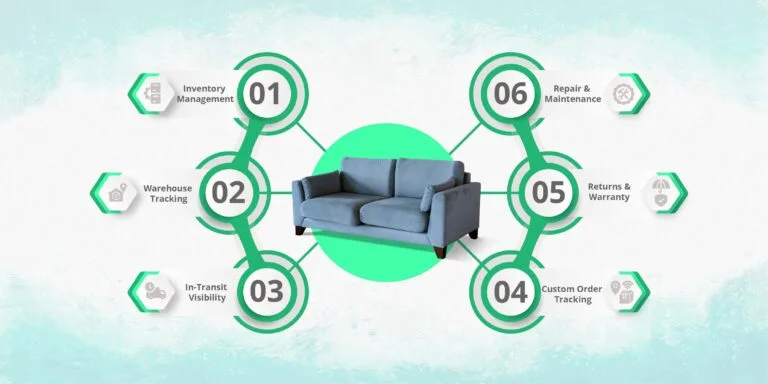
Bulky, low-volume, high-value goods sold from a showroom and a warehouse at once. The inventory problem is knowing what is displayable, what is in the back, and what is still with the supplier.
Read the noteCounting answers what was there when someone looked. Visibility answers what is there now, which is a different capability and supports a different set of decisions.
Read the noteA carton label is read once and discarded. A location label is fixed to a shelf and read for years, which changes what has to be decided before it is ordered.
Read the noteA portal reads a load that passes once and can be sent round again. A conveyor reads at line rate, with no second attempt and no operator watching, which makes a miss a silent loss.
Read the note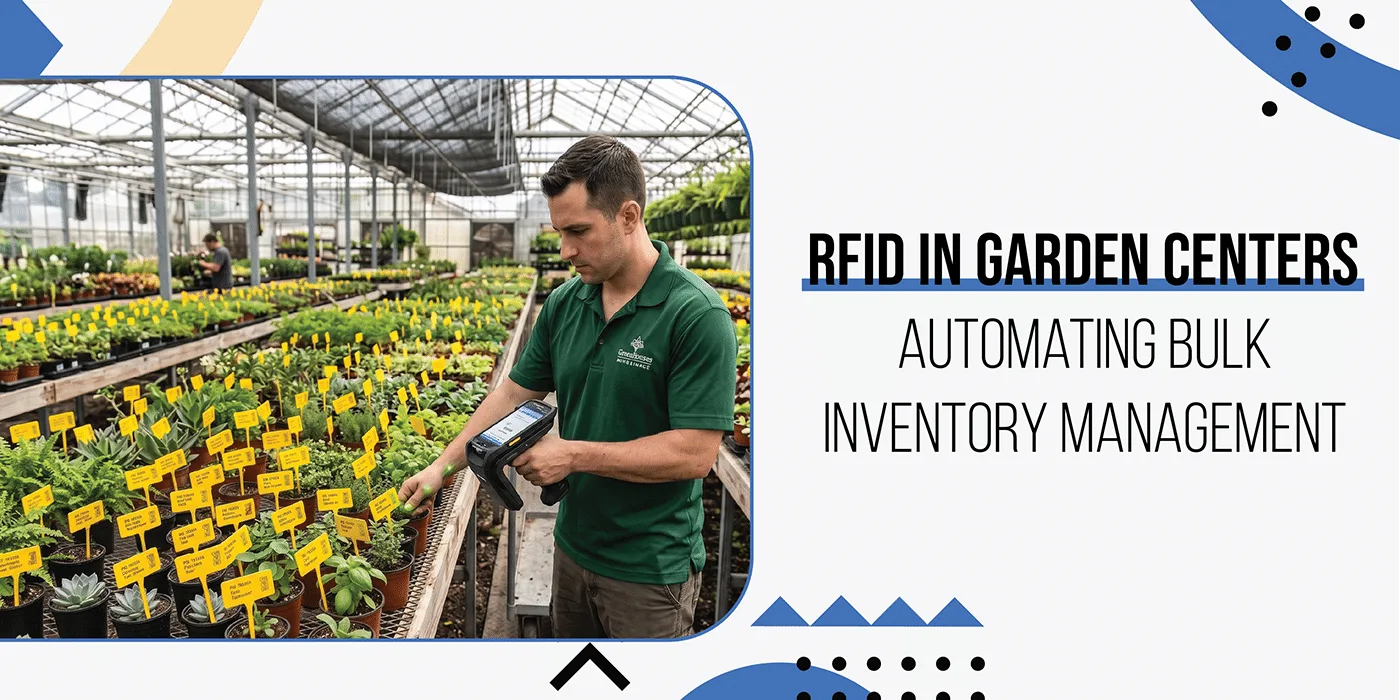
A garden centre holds plants that grow and die, bulk goods that are cheap per unit, and tools that go out on hire — three different inventory problems sharing one site.
Read the note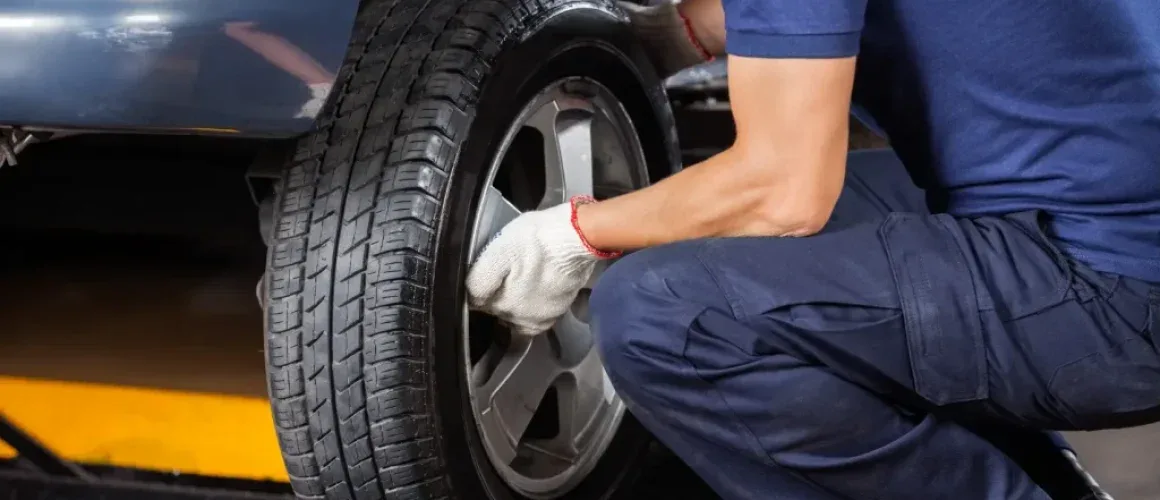
A tire is a manufactured product, a stacked warehouse item, an installed asset that changes vehicle, and a retread candidate. What the tag has to survive and what the record has to keep both follow from that sequence.
Read the note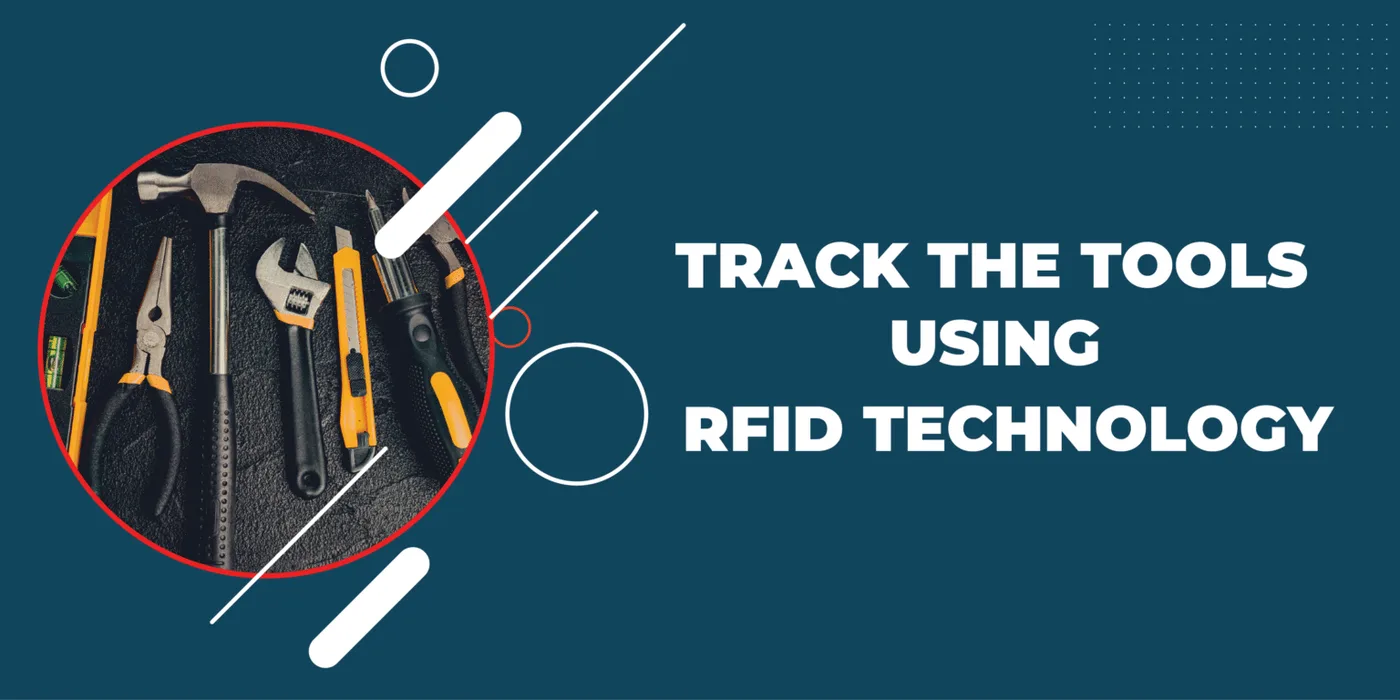
A reader at a crib exit can establish which tool left, when it came back and whose custody it was in. It cannot establish whether the tool is fit to use, and treating those as the same question is where a tool-tracking project goes wrong.
Read the note
Metal mirrors the radio field and moves a label’s resonance off the reader’s transmit band, and a laptop lid or a server chassis is where that shows up first. What detuning does to a read, which tag construction answers it, and how a pilot is run on real hardware before any scale-up.
Read the noteLab equipment is a mixed family — containers of liquid that absorb signal, metal instruments that detune it — so the tag format follows the item. This note sets out the per-item tag logic, the fixed-versus-handheld read decision, and the variance audit that separates matched, missing, extra and misplaced pieces.
Read the note
At close of day the tray count is the pressure test: pieces small enough to hide, items in the wrong showcase, a repair still listed as available. This note sets out when UHF reads a tray at once, when NFC is the right layer, and what the exception list has to distinguish.
Read the note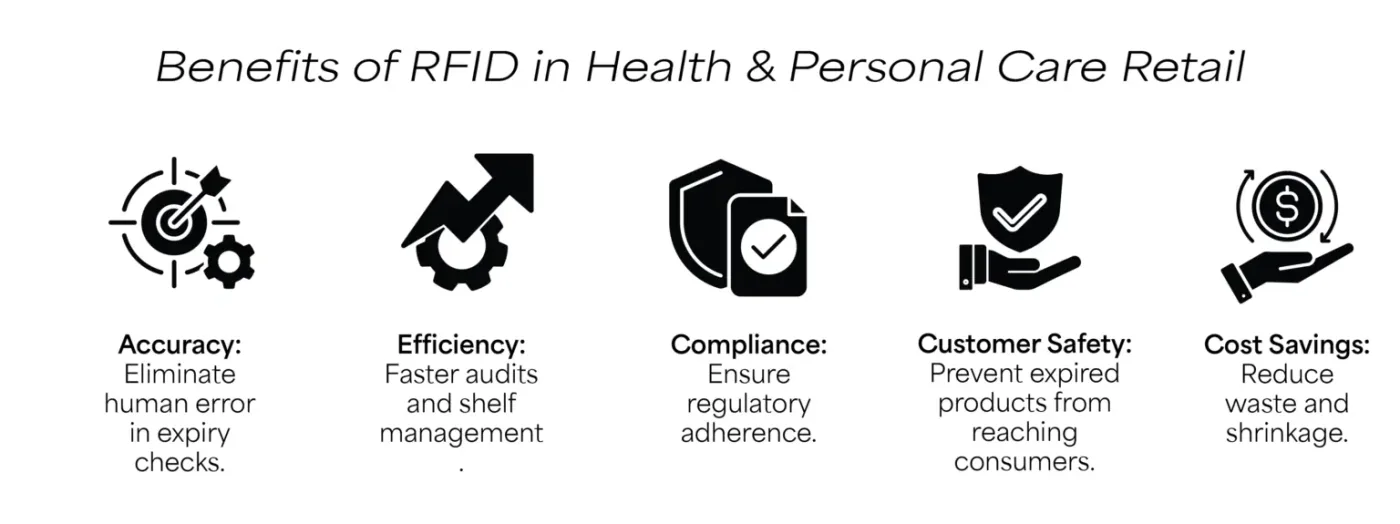
A sell-by date written into a product record does nothing until a scan can tie it to the physical item. Item-level RFID turns expiry into a field on the tag that bulk reads surface in real time, so removal and markdown decisions stop depending on someone walking the aisle.
Read the note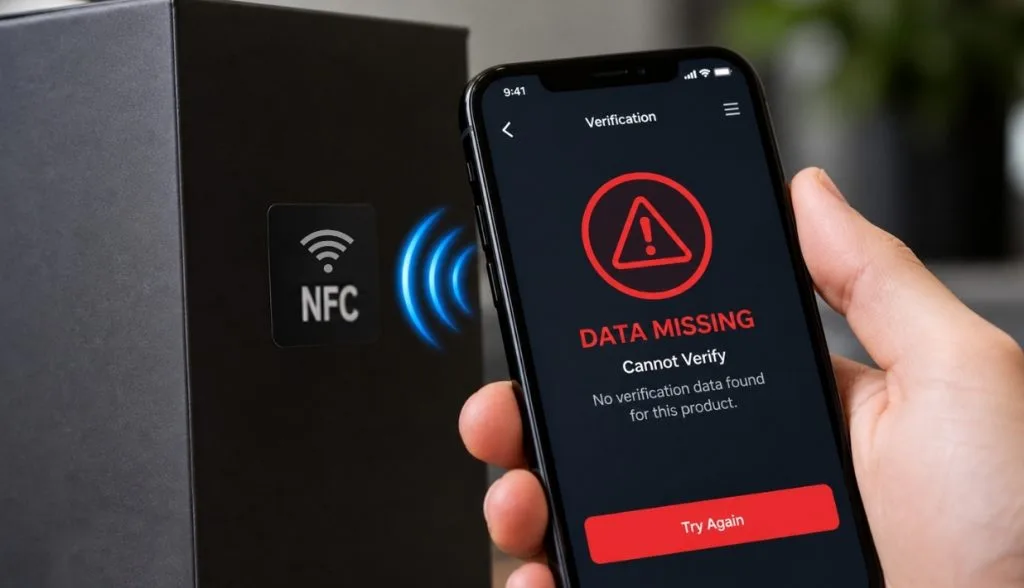
Barcodes identify an item and enterprise records describe a flow, but neither validates the physical component at the point of interaction. NFC closes that gap by carrying a unique, verifiable identity that a handheld can authenticate on the spot.
Read the noteA tap that opens a web page is not authentication; authentication is a cryptographic exchange in which the tag proves it holds a secret that never leaves the silicon. The pieces are a secure chip, a per-tap dynamic message, a tap counter and a verification server that holds the keys.
Read the noteThe two attacks on a premium spirit are the refill — a genuine bottle refilled with something else — and diversion, a genuine product in a market it was never meant for. A tamper-evident NFC seal answers the first in the radio domain, and the scan trail answers the second.
Read the note
An EU digital product passport requires a data carrier that is accessible, durable and authentic — a mandate that names no technology. The failure modes of printed codes and the survivability of embedded chips decide where NFC fits.
Read the note
A tag's factory identifier is unique but public: any reader in range can read it, and a copy can be made to answer with it. Authentication requires a secret, and stopping replay of that answer requires a message that changes on every tap.
Read the note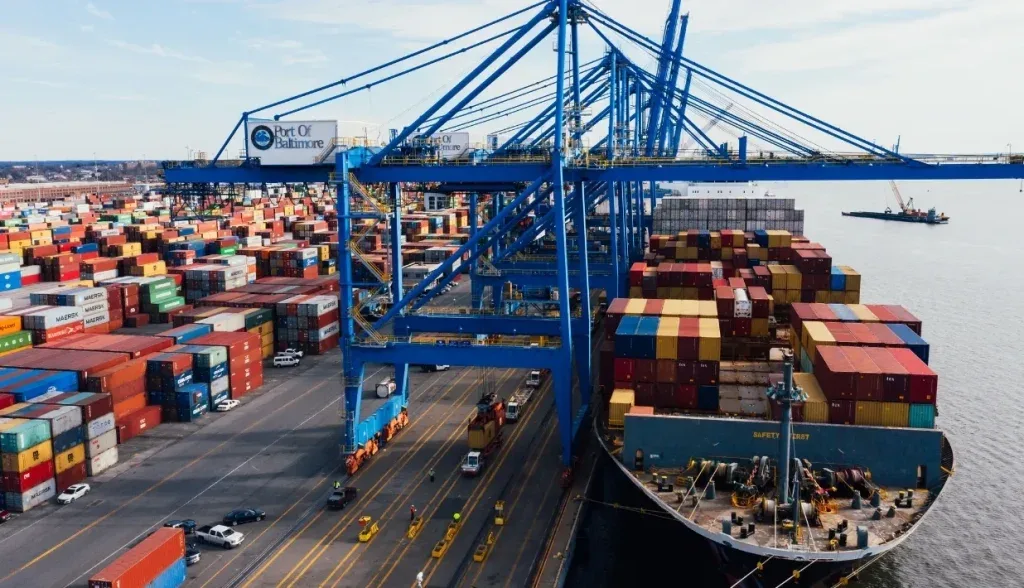
Three tag constructions answer three questions about a package: was it opened, was this label moved to another item, and what conditions did it travel through. Each works by a different irreversible or recorded physical change.
Read the note
NFC's short range is a strength, but not an immunity: eavesdropping, phishing tags, data manipulation, man-in-the-middle and theft each target a different layer. Each has a counter-mechanism, from signed records to per-tap validation.
Read the noteThe NFC protocol stack is standardized four times over: ECMA writes the interface and test methods, ISO adopts them, ETSI maps them to mobile networks, and the NFC Forum defines the tag types, data formats and modes applications rely on.
Read the note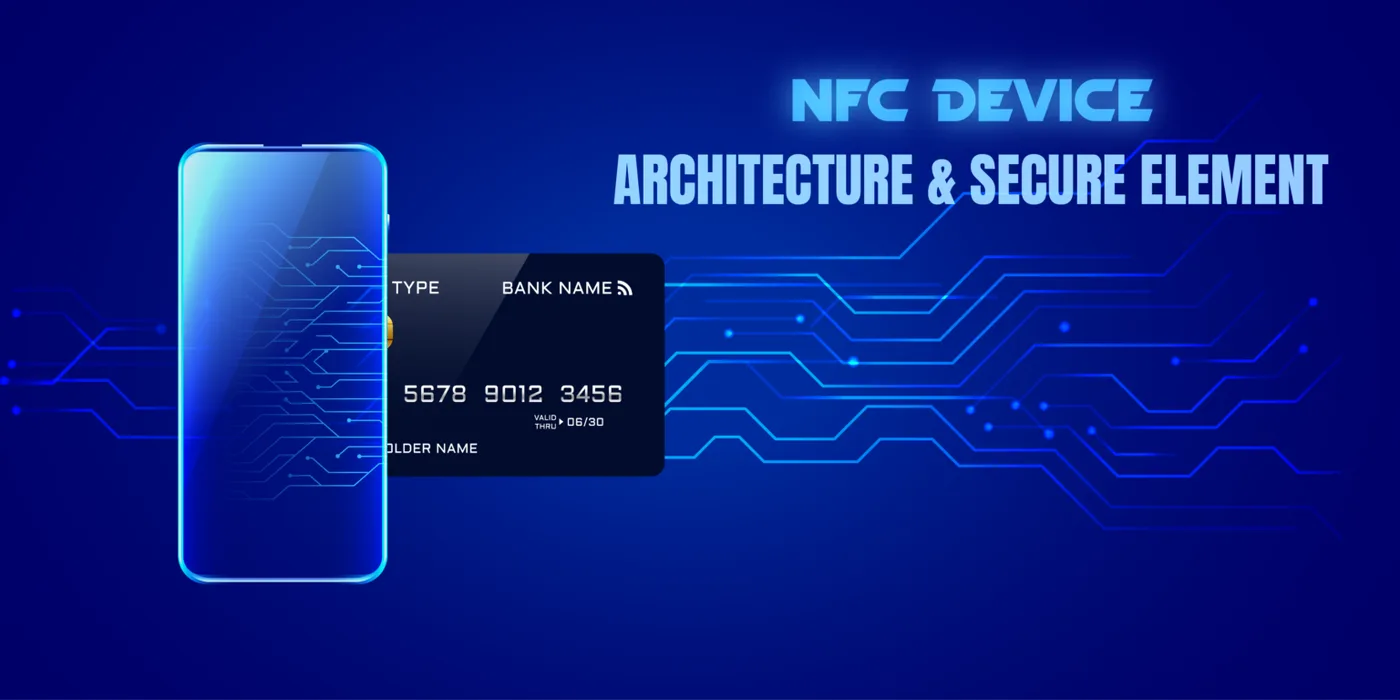
The secure element is the hardware that keeps NFC credentials — and decides who issues them. Three form factors put it in the SIM, in the phone, or on an add-on card, and each trades portability, ownership and radio performance.
Read the note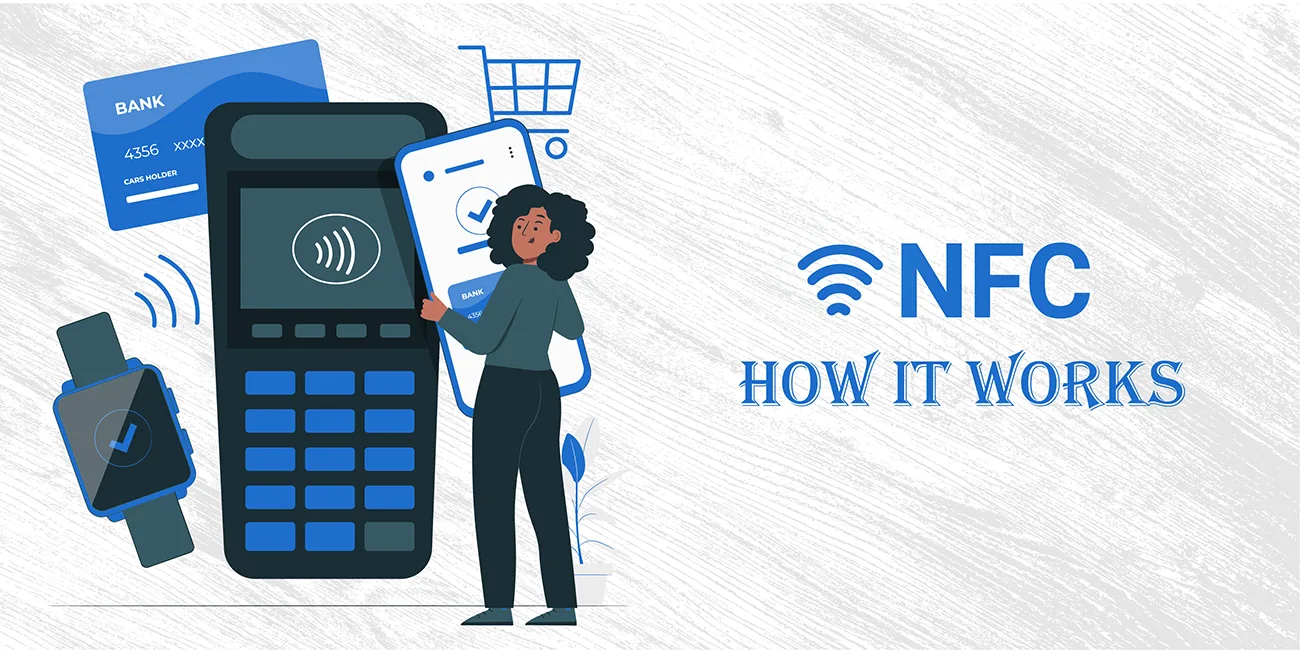
NFC is 13.56 MHz radio over a few centimetres: one device powers the other by induction, and the roles switch freely because a target is often a phone with its own power. Three modes — card emulation, reader, peer-to-peer — follow from that role change.
Read the noteConstruction sites defeat each familiar tracker in a different way: barcodes need a line of sight nobody guarantees, GPS needs a sky and a battery that hand tools do not have, and manual logs depend on a person remembering. RFID answers with a tag that reads through the site’s dirt and dust, and a scan that can be required.
Read the note
Rework is not the cost of a mistake; it is the cost of a mistake discovered late. Installation errors go uncaught because verification happens after the work is buried. Verification at the point of execution — each installed component scanned and checked against the design — moves the detection from the end of the phase to the moment of the act.
Read the noteTraceability that stops at delivery answers "where did it go" with a warehouse record. For a material installed behind a wall, the record’s valuable end is installation: identity, location, orientation and sequence, verified at the moment the component is put in place.
Read the note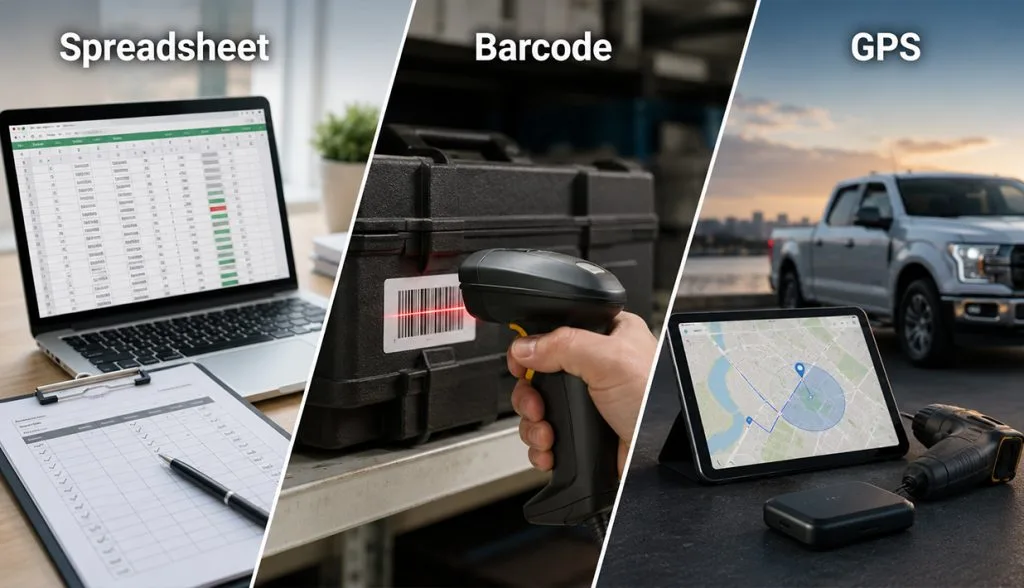
Equipment moving between job sites needs more than a list: each transition — arrival, inspection, custody — has to be a verified scan, because a spreadsheet cannot enforce a process and a barcode cannot be aimed through a construction day. Five stages make the audit trail.
Read the note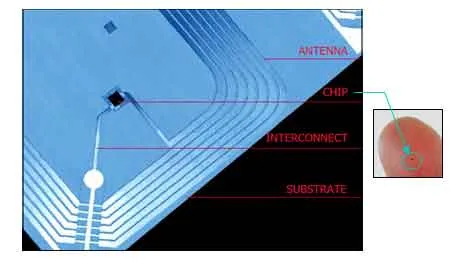
A tag is an integrated circuit, an antenna and a substrate, made by three different industries and joined at high speed. Which process forms the antenna, which material the substrate, and whether the tag is stock or custom, all follow from the application.
Read the note
Hotel linen moves through guest room, laundry, storage and back, and the movement defeats a count. Four categories — bed, bath, table and staff linen — set the inventory frame, and the wash cycle is where the tag earns its place, recording the life of each piece.
Read the note
The environment decides the tag. Autoclave sterilization kills an ordinary inlay; metal reflects the field an on-metal design re-tunes; a butterfly tag fits devices where nothing else does. The choice is a map of the setting, not a feature comparison.
Read the note
A textile in commercial laundry is washed, dried, pressed and folded in constant repetition, and the tag has to outlast the whole circuit to keep one record per item. The note looks at what a wash cycle does to an inlay and what each attachment method buys in return.
Read the note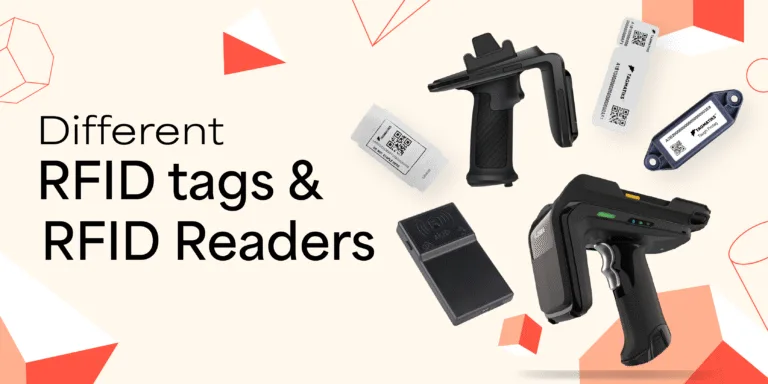
A survey is how a deployment gets its evidence: sample tags on real products, a floor-plan walkthrough, an RF background check and a measured map of read zones before hardware is committed. The note sets out the procedure in order.
Read the note
Each tracking technology answers a different question — checkpoint identity, outdoor position, indoor proximity, centimetre location — and none answers all of them at the same cost. The note sets out the five axes that decide the fit.
Read the note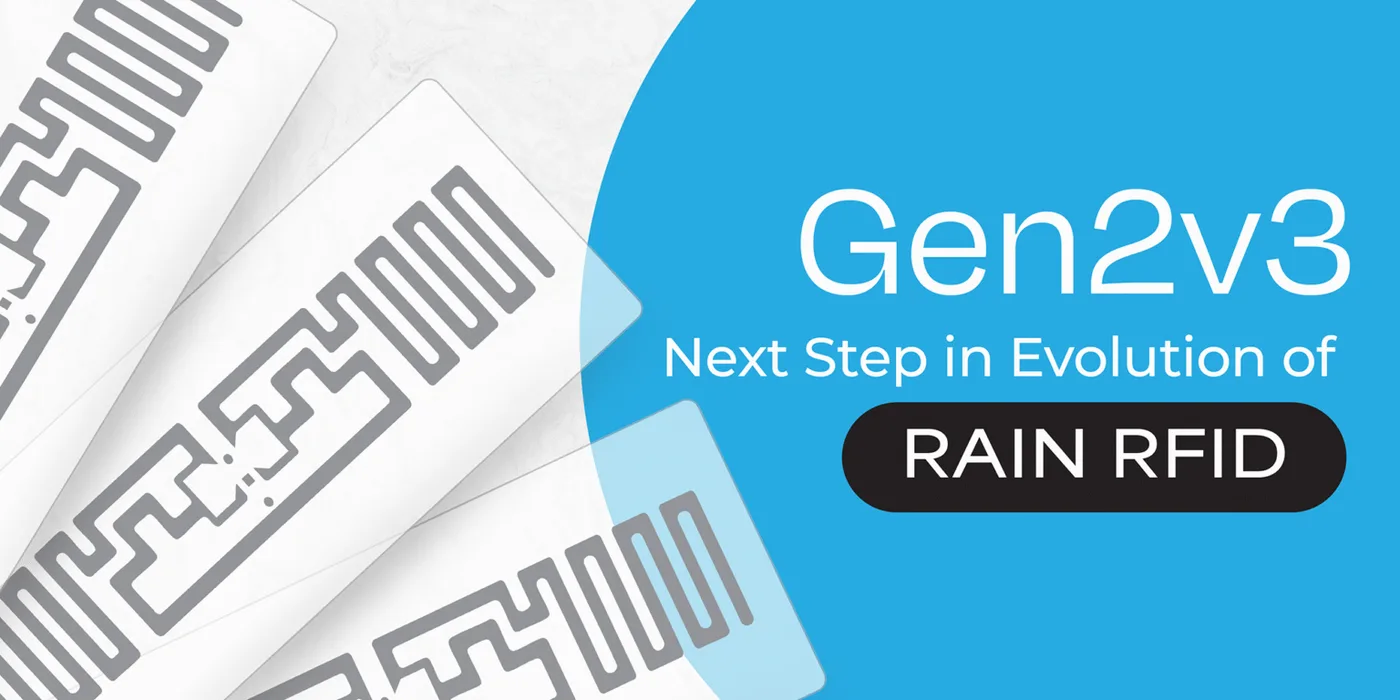
Gen2v3 revises the EPC UHF air-interface protocol in four places: the spectral efficiency of the return link, how a dense tag population is inventoried, how a tag proves its identity, and how its user memory is structured. What an existing Gen2v2 deployment actually gains — and what it must not have to change — follows from those four mechanisms.
Read the note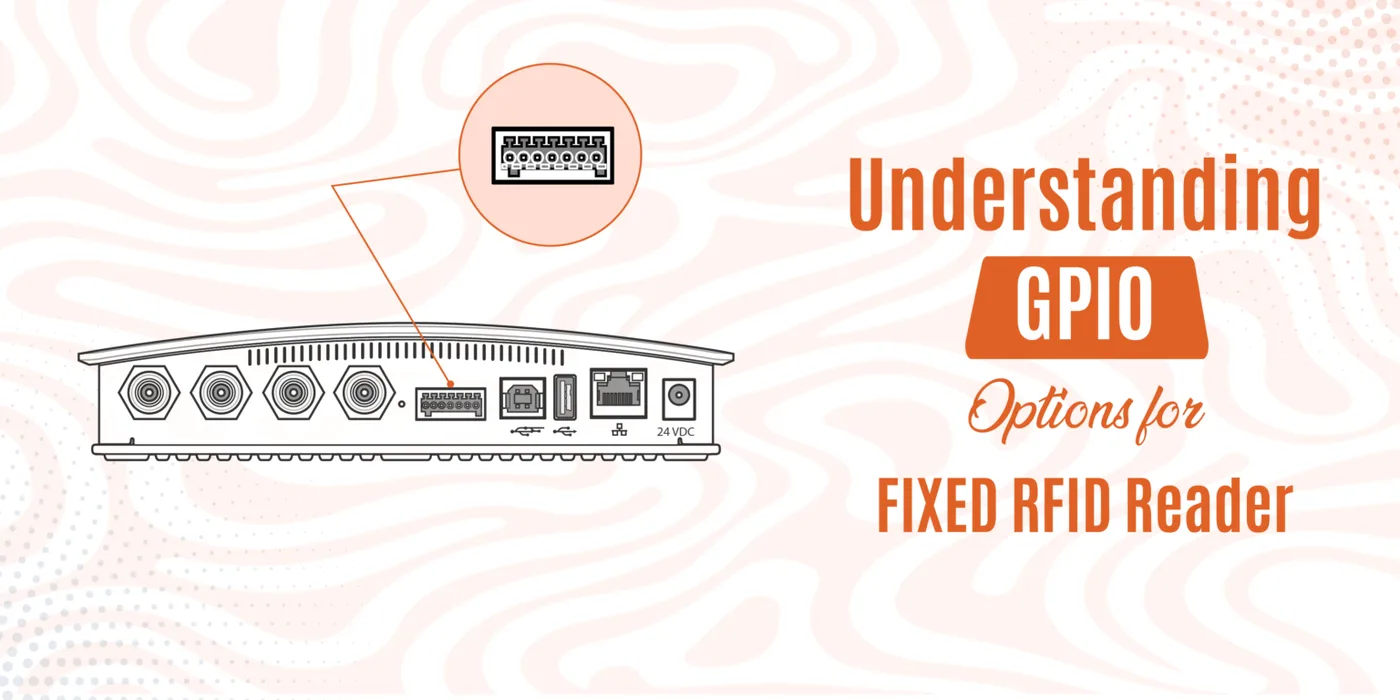
A fixed reader reports what it sees but changes nothing on its own. GPIO is the interface that lets it receive signals from switches and sensors and drive the devices that act on a read — and the setup order that keeps those signals honest.
Read the noteA printer-encoder must decide, for every label, whether the tag inside it deserves to be written. The checks run in a fixed order — null-data quality marking, write, verification, void-marking — and the setup parameters and applicator types determine whether that decision can be made at all.
Read the noteA passive tag has no transmitter: it answers by borrowing the interrogator’s energy and shaping part of it. Whether that exchange happens inductively or by backscatter is decided by the λ/2π boundary, and range, orientation and material rules all follow from it.
Read the noteA read point is more than an interrogator and an antenna: feedback devices turn a read event into something an operator or the conveyor can act on, and triggering devices decide when the reader is allowed to transmit at all. How the two halves are wired is what makes a zone run a process instead of just logging reads.
Read the noteEvery application picks a band before it picks anything else, and the choice follows from physics: coupling range, power budget, and the way water and metal treat the signal. This note maps each band — LF, HF/NFC, UHF, 433 MHz, 2.45 GHz, UWB — to the jobs it is typically given and explains the mechanism behind each grouping.
Read the note02 / LIBRARY MATERIAL
Review the authorized customer cases by their stated operating context and published evidence boundary.
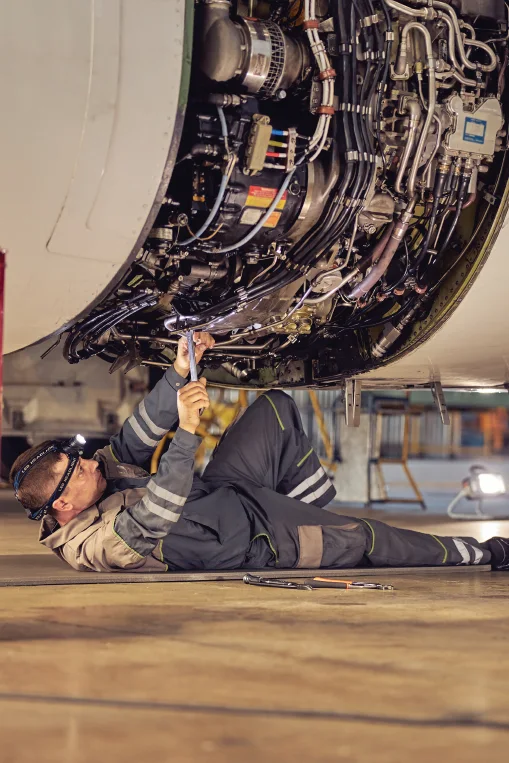
A maintenance-asset workflow used RFID labels, location updates and handheld inventory checks to support short aircraft upgrade windows.
Read the note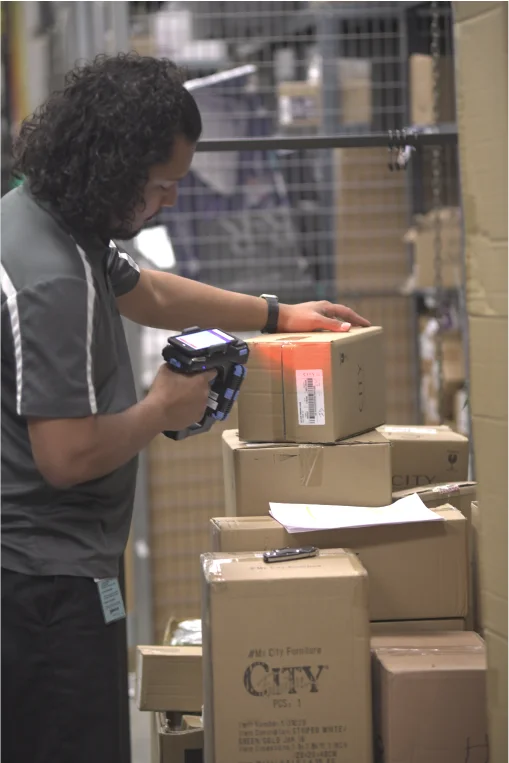
A retail showroom workflow used RFID-enabled labels and handheld checks to change the effort required for recurring inventory counts.
Read the note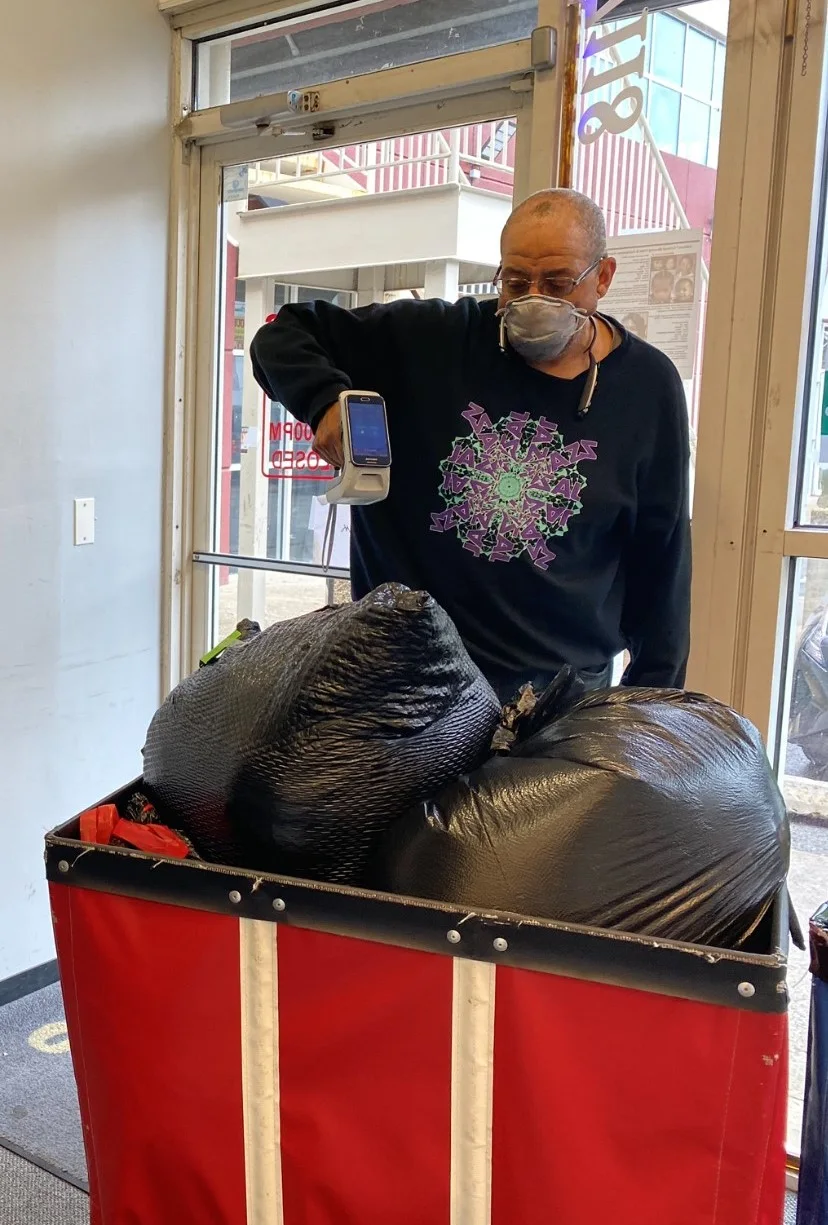
A healthcare-garment laundry workflow used RFID-tagged garments and bag-level scans to compare pickup and return contents.
Read the note
A shoe inventory workflow used RFID-tagged cartons and handheld checks to connect receiving, shipping and e-commerce inventory visibility.
Read the note
A campus asset workflow used RFID labels and handheld checks to track equipment across many rooms, find items and reduce manual inventory effort.
Read the note
An equipment workflow used RFID tags and handheld checks to connect field assets with inspection records and service operations.
Read the note