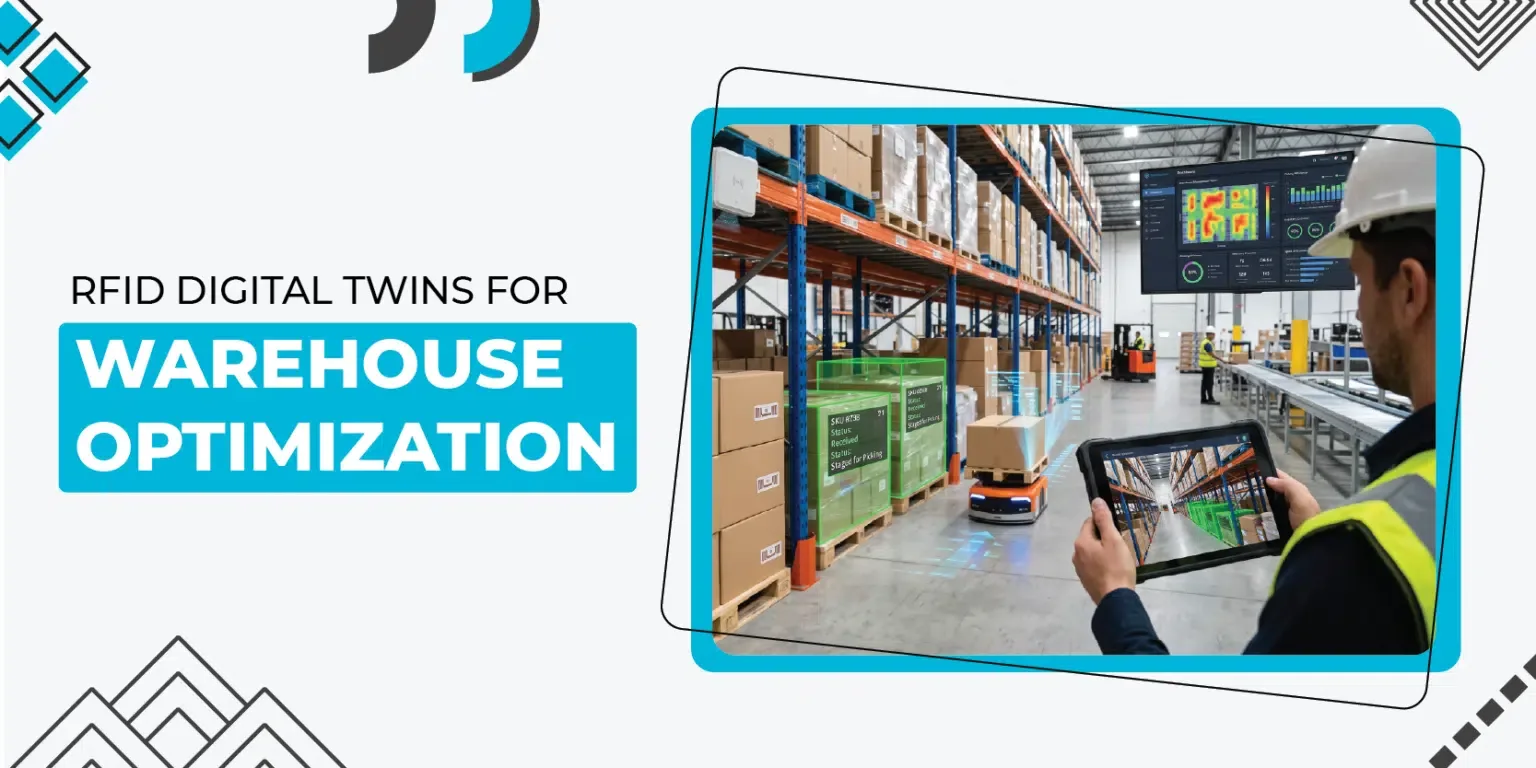
A simulated warehouse is only as good as the data feeding it. The parts of a twin that work are the ones grounded in continuous capture rather than in periodic counts.
01 / FIELD NOTE
Keep the decision tied to the operating context.
A digital twin is a model of something physical that is kept current by data from the thing itself. In a warehouse, that means a representation of the building, its locations and its contents that reflects what is actually there — which makes it entirely dependent on the quality of the record underneath it.
That dependency is the useful thing to examine, because it separates the parts of a twin that work from the parts that do not. A model fed by a count taken twice a year describes the warehouse of six months ago, and every decision it informs inherits that lag. A model fed by continuous capture describes the warehouse now, and the difference is not in the modelling but in the input.
The most tractable use is layout and slotting. Where items are stored, how often they move, and how far a picker travels are all questions that can be answered from a movement history — and the answers are useful without any simulation at all, because they describe what is happening rather than predicting what might. Fast-moving items stored at the back of the building is a finding, not a hypothesis.
Congestion and flow are the next step and are harder. Where aisles become blocked, where traffic conflicts, where staging areas overflow — those are visible in a movement record if the record holds where things were and when, and they are exactly the questions a static count cannot address because congestion is a property of timing rather than of quantity.
Capacity planning follows from the same data. How full the building actually gets, how that varies through a season, and which areas run out of space first are measurable from positions over time. A plan based on the annual peak that ignores the shape of the peak will size the wrong areas, and the shape is only visible in a continuous record.
The equipment dimension matters more than it first appears. Pallets, roll cages, totes and handling equipment move through the same building and are lost in the same ways as stock, and they consume space and constrain flow. Including them in the same identity scheme rather than a separate one means the model describes the building as it is rather than the stock in it as it was counted.
Simulation proper — testing a layout change or a process change before making it — is the use the term usually implies, and it is where the record’s limits bite hardest. A simulation is only as good as its input distribution, and input from periodic counts gives a distribution that is smoothed and delayed. Input from continuous capture gives the actual variation, including the peaks, which are the conditions the simulation exists to test.
The model has to be maintained or it becomes a liability. A twin that drifts from reality is worse than no twin, because decisions are made against it with more confidence than the underlying data warrants. Keeping it current is a recurring task, and the cost of that task belongs in the decision to build one rather than in the surprises afterwards.
What a twin cannot tell you is worth stating. It cannot verify condition, it cannot confirm that a location is physically accessible, and it cannot substitute for someone walking the floor. Where the model and the building disagree, the building is right, and a system that encourages people to trust the model over what they can see has inverted the relationship it was meant to support.
The practical sequence is to make the record good first and model second. A warehouse that can answer what is where, and what moved when, has the input a twin needs; one that cannot will build a model of its own uncertainty. The visibility work is the prerequisite and it has value on its own, which is what makes doing it first a low-risk order of operations.
The measurement that matters is whether the same movement history supports both the model and the ordinary questions the operation asks. If a supervisor can find a consignment and the planner can see where space is running out, from the same record, the twin is grounded in something real. If the twin needs its own separate data collection to stay useful, it is a reporting exercise with a physical metaphor attached.
A twin is better understood as a use of a good record rather than a project in its own right. The record is the asset; the model is one way of reading it. Organisations that build the record first find the modelling cheap and the questions easy; those that start with the model discover that they have built an elaborate way of displaying data they do not have.
02 / WHAT THE MODEL NEEDS
A record current enough to model.
- Positions over time, not quantities at intervals
- Movement history, so a slotting question can be answered
- Equipment in the same identity scheme as stock
- Variation and peaks, which periodic counts smooth away
03 / WHAT IT STILL CANNOT DO
Limits worth accepting.
- Condition, and whether a location is physically accessible
- Anything about a building that disagrees with the model
- A twin fed by its own separate data collection
- The maintenance cost, which belongs in the decision to build one
Bring the item, material, movement, target read and system context to a sample or project review.
Request a sample test