The Electronic Product Code is a structured identifier that a reader reports and a network can interpret. It identifies the object, not the tag, and its structure is what makes it portable between systems.
01 / FIELD NOTE
Keep the decision tied to the operating context.
A reader reports numbers. What makes those numbers useful beyond the reader that produced them is the structure they follow. The Electronic Product Code is that structure: a defined way of encoding an identity so that a system receiving it can tell what kind of thing it refers to and how to look it up.
The essential distinction is between the tag and the object. The tag identifier in bank 2 identifies the chip and never changes. The EPC in bank 1 identifies the object the tag is attached to, and it is written by whoever applies the tag. A single object may be re-tagged without changing what it is; a single tag may, in principle, be blank until it is applied. Keeping the two apart is what allows an EPC to be replaced or corrected without invalidating the physical tag.
An EPC is not an arbitrary string. It is a structured value whose leading fields declare what scheme the rest follows. That is what lets an identifier created by one organisation be interpreted by another without prior agreement about the specific value — the scheme is published, and the receiver looks up the scheme rather than the individual code.
Several coding schemes exist for different purposes. The General Identifier is the general-purpose form, with a defined partition that lets the scheme carry a company prefix and a serial portion of varying lengths. Others are designed for specific things being identified: a trade item, a location, a returnable asset, a document. Which one applies follows from what the identifier is for, not from the technology, and a system that mixes schemes has to record which one each value uses.
The standard that defines these formats also defines how an EPC is encoded for use in the information systems above the reader — the layer where an identifier is stored, queried and joined to records the business already keeps. That is the layer at which RFID stops being a reading technology and becomes a data technology, and it is where most of the integration work sits.
A practical consequence is that EPC design is a data-modelling decision made before any hardware is installed. If the identifier has to carry a company prefix, a product reference and a serial number, its length and partitioning have to be chosen so that each part has room to grow. If several schemes will coexist, the system has to know which is which. If the identifier will be printed on a label as well as encoded on a tag, the printed form and the encoded form have to be derived from the same source so they cannot disagree.
It is also worth being clear about what the EPC does not do. It carries no measurement, no timestamp and no location — those come from the reader and the system around it. An EPC on its own says what the object is, not where it is or what condition it is in. Everything a workflow does with an identifier is added by the systems that observe and record it, which is why the read event and the identifier are designed together rather than separately.
02 / TWO IDENTITIES
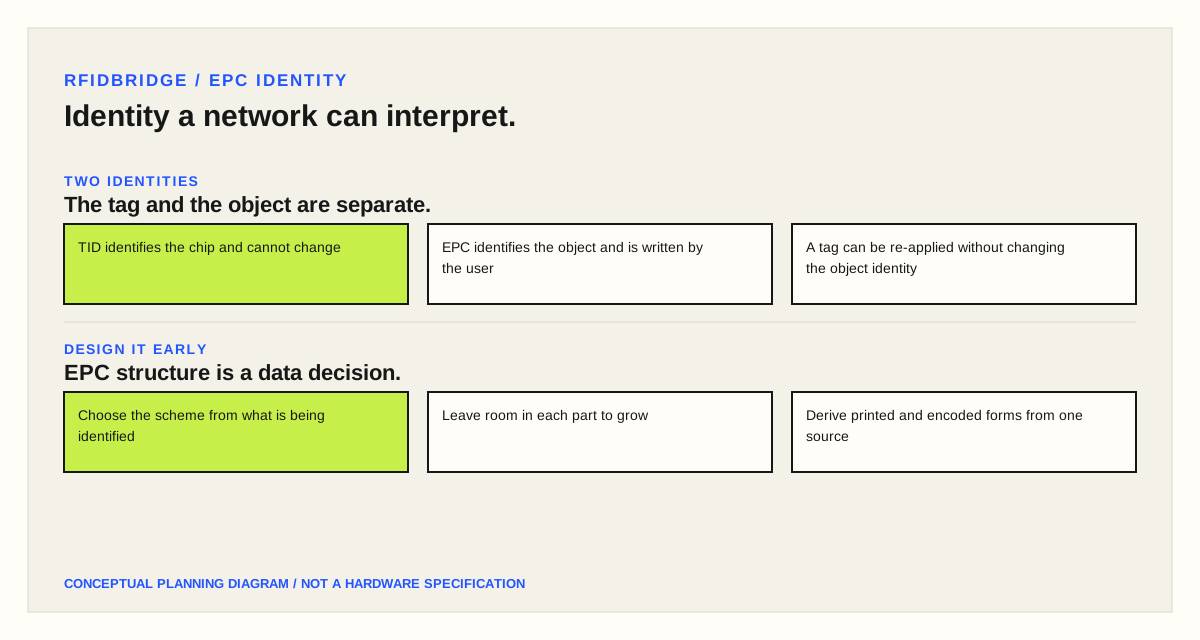
The tag and the object are separate.
- TID identifies the chip and cannot change
- EPC identifies the object and is written by the user
- A tag can be re-applied without changing the object identity
03 / DESIGN IT EARLY
EPC structure is a data decision.
- Choose the scheme from what is being identified
- Leave room in each part to grow
- Derive printed and encoded forms from one source
Bring the item, material, movement, target read and system context to a sample or project review.
Request a sample test