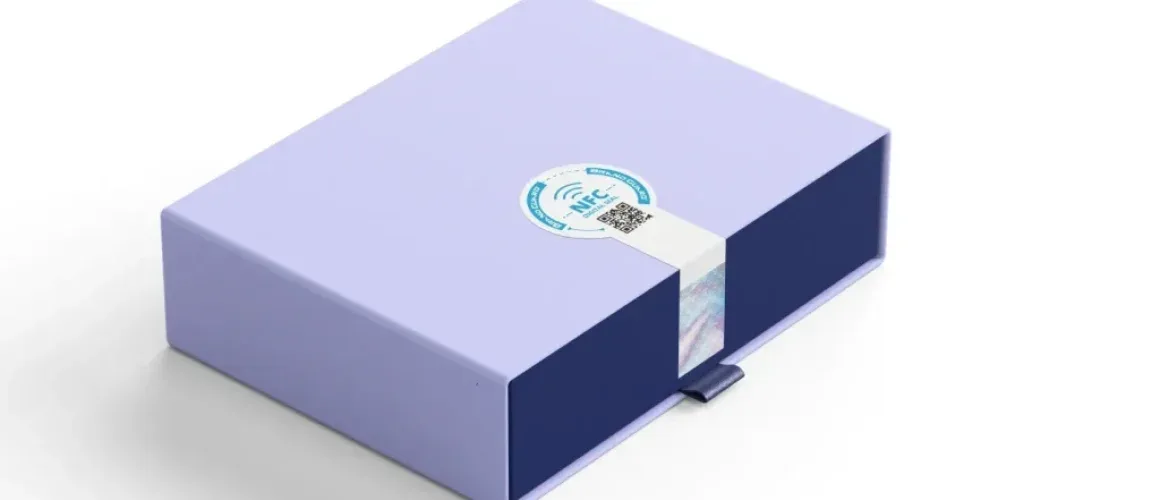
An EU digital product passport requires a data carrier that is accessible, durable and authentic — a mandate that names no technology. The failure modes of printed codes and the survivability of embedded chips decide where NFC fits.
01 / FIELD NOTE
Keep the decision tied to the operating context.
A digital product passport is a requirement that attaches to each item sold in a market: the item must carry, or point to, a body of data about itself — origin, materials, repair and recycling instructions — and that data has to be reachable by whoever touches the item, from the consumer to the recycler. The rule is framed around what the carrier must do, not what it must be; the three properties named are that the data be accessible, durable and authentic. That framing matters, because it moves the debate from "which technology" to "which technology actually holds all three" and that is where the physics loads the dice.
A printed code is accessible in the cheapest sense: a camera reads it free, no protocol. But accessibility in the passport sense is what the code looks like at the end of the item's life, not on the day it was printed. A label on a bottle, a bag or a garment is a surface artifact; surfaces abrade, wash, dry and fade, and a passport that has to serve the recycling step at the end of a decade does not survive on a surface. The durability requirement quietly disqualifies the carriers whose read happens on paper.
Authenticity is where print fails outright. A printed code states an identity; it cannot prove it, because the code is a reproducible pattern. A copied QR on a counterfeit item presents the same address to the same camera, and the server behind the address cannot tell whether the item it describes is the item being scanned. For a passport whose entire function is to make claims about the physical item trustworthy, a carrier that cannot tie the claim to the object is not a carrier at all.
The NFC answer to accessibility is deliberately frictionless: the item carries a chip, the phone taps it, and a secure-unique-message interaction hands the phone an address that opens in the standard browser. No application, no account, no training — the audience includes the consumer at the point of sale and the recycler ten years later, and both get the same interaction. The answer to durability is placement: a chip embedded inside a lining or behind a structure is not exposed to the surface wear that kills a print, and the interaction does not require the code to be visible.
The authenticity half is the mechanism this note is built on. The chip holds a key the surface cannot carry; each tap produces a message that changes with an internal counter; the verification server recomputes the message, checks the counter against replay, and answers in real time. A passport anchored to such a chip is a claim that cannot be copied because the thing that must be copied is a secret in protected silicon. The passport is not a document about the item; it is a live answer about this item.
There is a second, quieter reason the authenticity half matters beyond policing. A passport also feeds the circular economy: a recycler taps the item to get dismantling instructions and material composition. That read happens after years of use, on an item nobody authenticated at the point of reuse — and the entire step is only trustworthy if the chip has not been swapped, removed or reattached. The same bond-and-key pair that prevents a copied passport also prevents a resurrected one: the embedded tag breaks on removal, and the record it anchors is the item's own.
The honest limit of the mechanism: the rule is technology-neutral, and the chip is a carrier, not a certificate of the underlying claims. A passport anchored to a secure tag authenticates the item's identity and its data currency; it does not verify that the material declaration inside the record is true — that responsibility stays with whoever wrote the record. What the mechanism contributes is that the record cannot be detached from the item, read ten years on, and replayed; every read is anchored to a live key. That is the property a passport that must outlast the retail experience cannot do without.
02 / THREE PROPERTIES
The mandate names behaviour, not technology.
- Accessible: a tap opens the record in the standard browser
- Durable: an embedded chip outlives a surface label
- Authentic: a key no surface can carry binds claim to item
- The rule is technology-neutral — the physics decides the carrier
03 / THE FAILURE OF PRINTS
What a printed code cannot do.
- A copied code presents the same address to the same camera
- Surface labels abrade, wash and fade before the item is recycled
- The server cannot tell whether the item matches the code
- Print states an identity; it cannot prove it
04 / THE LIVE ANSwer
Each tap is a recomputation, not a lookup.
- The per-tap message changes with an internal counter
- The server recomputes and refuses replays
- Embedded tags break on removal, blocking resurrection
- The chip authenticates identity and currency; the material claims stay with the author
Bring the item, material, movement, target read and system context to a sample or project review.
Request a sample test