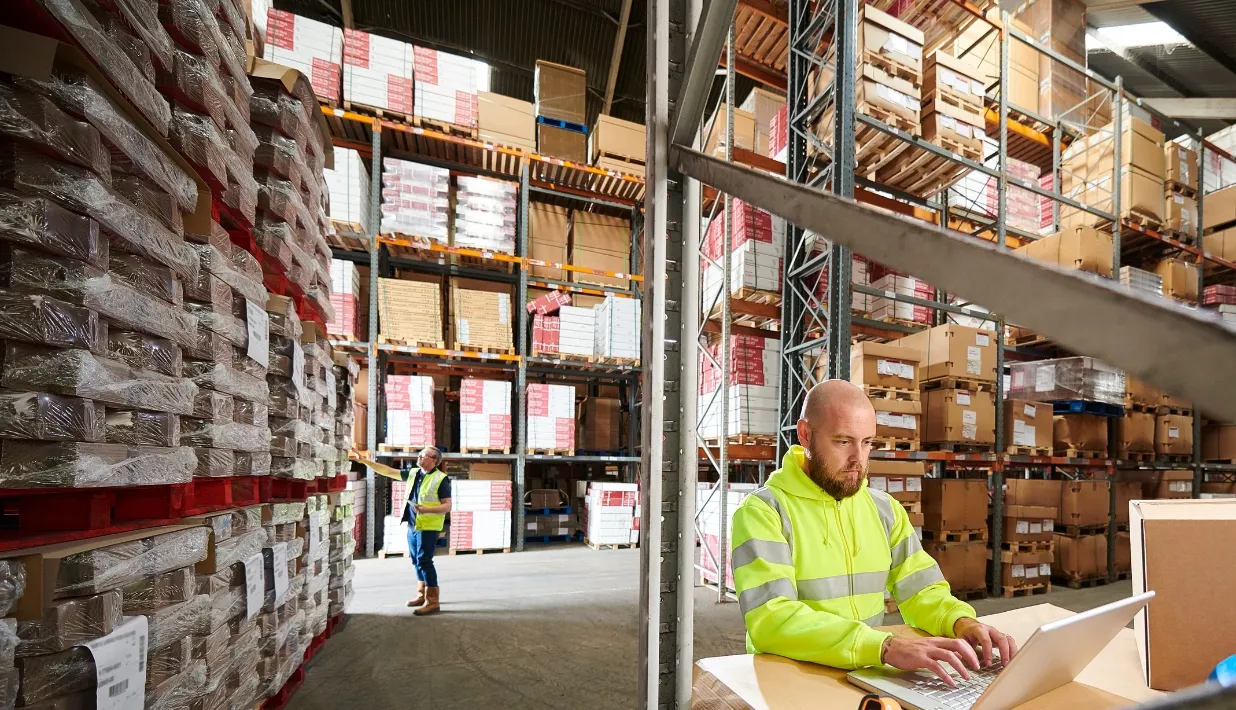
Readers produce observations; operations and business systems need trustworthy events. Plan the processing layer around identity, timing, location, exceptions and recovery rather than treating raw reads as completed transactions.
01 / FELDNOTIZ
Separate observation from event
Keep the raw reader observation distinct from the normalized business event. Define the item or load-unit identity, location, trigger, time window and operation that must be recognized before data is posted downstream.
02 / FELDNOTIZ
Write the event contract
Name the required identifier, location, timestamp, source, operation and workflow state. Decide which fields are authoritative, which are derived and what evidence must remain available when a value is incomplete or conflicting.
03 / FELDNOTIZ
Filter and validate
Apply deduplication, timing, location and state rules before an event reaches a WMS, ERP, MES or another business system. Keep enough raw context for diagnosis when an observation is rejected, delayed or ambiguous.
04 / FELDNOTIZ
Connect systems deliberately
Document the fields, interface, authentication, retry behavior and ownership for each handoff. A processing layer can route events across different systems, but it does not remove the need for a clear source of truth and failure path.
05 / FELDNOTIZ
Make rejection recoverable
Give missing identity, unexpected state, duplicate submission, timeout and offline conditions a visible queue or owner. Preserve the original observation, processing decision, downstream response and next action instead of silently discarding a failed event.
06 / FELDNOTIZ
Test the complete flow
Exercise normal movement, repeated reads, delayed messages, rejected transactions, replay and recovery. Record the observation, normalized event, system response and final operator action as acceptance evidence.
Bringen Sie Material, Bewegung, Ziel-Lesung und Systemkontext in eine Muster- oder Angebotsanfrage ein.
Request a sample test